

 English
  русский
  Español
  Deutsch

A belt can seem like a small part of a child's outfit, yet it often becomes noticeable when it does not fit properly. Trousers may slip, the waistband can feel uncomfortable, or a child may struggle with the fastening. These issues are especially relevant when the same type of clothing is worn for several hours at school or during an active sports session.
The choice also changes with the setting. School uniforms usually call for a neat and uncomplicated appearance. Sports clothing needs to allow movement without making the waistband feel restrictive. For children who are still growing, adjustability becomes another practical concern.
Rather than treating a belt as a simple accessory, it makes more sense to consider the trousers, the child's routine, and the way the fastening will be used. Width, material, buckle design, fit, and adjustment all affect the experience, but they do not carry the same importance in every situation.
What Makes Youth Belts Suitable for School Uniforms
School uniforms tend to be worn repeatedly, so small inconveniences can become irritating over time. A belt that is difficult to thread through the loops or awkward to fasten may cause problems during an otherwise ordinary school day.
The width should correspond with the belt loops on the trousers. This is easy to overlook when choosing a belt separately from the clothing. Before buying, checking the loop size can help avoid a situation where the belt technically fits the waist but does not work well with the trousers.
The buckle is another part worth considering. Younger children may need to manage the fastening themselves, particularly when changing clothes or using the restroom. A straightforward mechanism can make that routine easier.
Appearance matters as well, although it does not need to dominate the decision. A plain belt in a color that works with the uniform can be used across different school outfits without drawing unnecessary attention.
For school use, a few practical details are worth checking:
- Does the width fit comfortably through the trouser loops?
- Can the child open and close the buckle without help?
- Is there enough adjustment for the way the trousers are worn?
- Does the material remain comfortable during long periods of sitting?
The right choice is therefore closely tied to the child's routine. A belt that works well for school does not necessarily need the same features as one intended for outdoor activity.
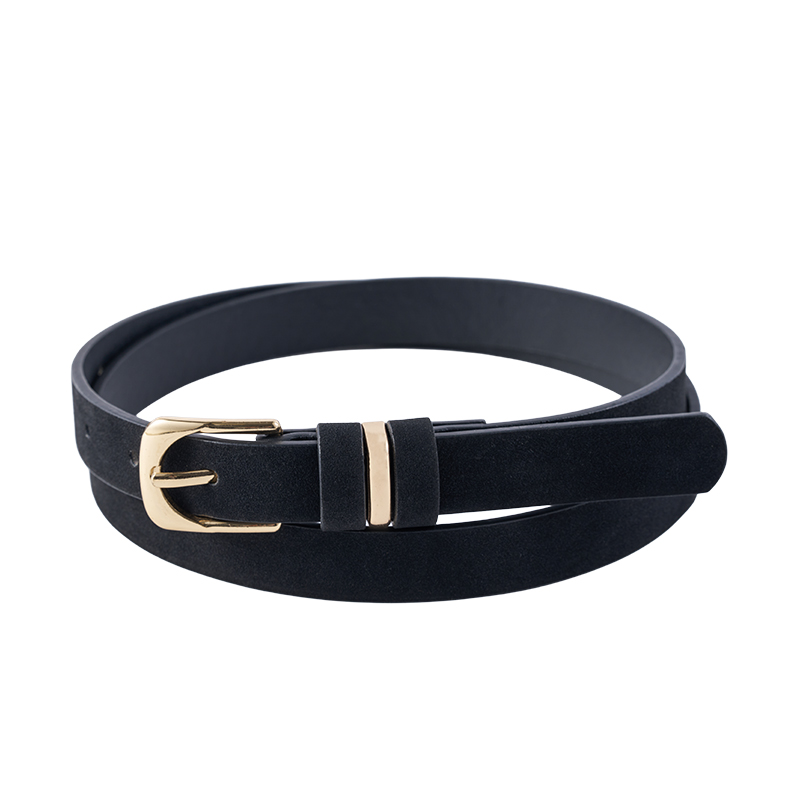
Why Are Youth Belts Common in Baseball and Softball
Sports clothing changes the situation. Running, bending, throwing, and quick changes of direction place more movement around the waist than sitting in a classroom does.
This is one reason flexible belts are often seen with baseball and softball uniforms. A little give in the material can make movement feel less restricted. The belt still needs to keep the trousers in place, but it should not become a source of discomfort whenever the player moves.
The trousers themselves are part of the equation. Sports pants may have belt loops designed around a particular width, so choosing a belt without checking them can create an unnecessary fitting problem.
There is also the matter of changing clothes. A child may arrive in everyday clothing, put on a sports uniform, and later change back again. A fastening system that can be handled quickly has a practical advantage in that situation.
Color can have a role too. Team uniforms often have a coordinated appearance, so a belt that works naturally with the clothing tends to look less out of place.
A useful way to judge a sports belt is to think about the activity rather than the product sitting unused. If a child can run, bend, sit, and move without repeatedly adjusting the waistband, the belt is doing its job without becoming a distraction.
How Do You Measure a Child for Youth Belts
A common mistake is to assume that the size of a child's trousers automatically tells you which belt to buy. It does not always work that way. Trousers can sit at different positions on the waist, and their cuts can vary even when the labeled clothing size appears similar.
The simplest method is to measure around the area where the belt will actually sit. The child can wear the trousers normally while the measurement is taken. The tape should be comfortable against the waist rather than pulled tightly.
There is another useful reference: a belt that already fits. If there is one at home that the child wears comfortably, its adjustment position and overall length can provide a helpful comparison when choosing another one.
For adjustable designs, the adjustment area deserves attention. A belt that can be moved through several positions may work with more than one pair of trousers. That does not remove the need to choose an appropriate size, but it can make small differences easier to manage.
The position of the trouser waistband should not be ignored. Some children wear trousers higher on the waist, while others prefer them lower. Measuring where the belt will sit gives a more realistic result than taking a measurement at an arbitrary point.
A straightforward approach is:
- Put on the trousers normally.
- Identify the position where the belt will sit.
- Measure around that area comfortably.
- Compare the result with the available size guidance.
- Check the adjustment range before making the final choice.
This method also helps avoid buying based entirely on age. Children of the same age can have very different clothing fits, so the actual waist position remains more useful than an age label alone.
How Should Youth Belts Fit Around the Waist
A belt should hold the trousers in place without making the child constantly aware of it. That sounds simple, but fit can change when the wearer sits down, bends over, or walks around.
Try checking the fit in several normal positions. If the waistband feels comfortable while standing but becomes noticeably tight when sitting, the adjustment may need to be changed. If the trousers move whenever the child walks, the belt may not be providing enough support.
The buckle should sit naturally rather than pulling the waistband toward one side. The belt should also lie flat inside the loops. Twisting can make an otherwise suitable belt feel uncomfortable.
Children can be quite direct about these issues. If a child repeatedly asks for the belt to be loosened, avoids wearing it, or adjusts it throughout the day, those reactions are worth paying attention to.
| Fit issue | What may happen during use |
|---|---|
| Too loose | The trousers may shift while walking |
| Too tight | Pressure may become noticeable when sitting |
| Too wide | Threading through the loops may be difficult |
| Too narrow | The belt may move more than expected |
| Poor adjustment | The buckle may sit awkwardly |
There is no need to make the belt as tight as possible. A useful fit leaves room for ordinary movement while keeping the trousers comfortably positioned.
Which Youth Belt Materials Suit School and Sports
Material affects how a belt feels, especially when it is worn regularly. A child who spends much of the day sitting may notice stiffness differently from one who spends an afternoon running around a field.
Elastic materials have some flexibility, which can be useful for active clothing. They can move with the body instead of holding the waist in one fixed position. That can make a difference when the child is repeatedly bending or stretching.
A less flexible material creates a different wearing experience. It may feel more structured and can suit clothing where a firmer appearance is preferred.
There is no universal material choice for every situation. School clothing, sports uniforms, and casual trousers can all create different requirements. The useful question is whether the material suits the way the belt will actually be worn.
Cleaning is another consideration. A belt used during sports may encounter moisture and dirt more often than one reserved for school clothing. Material that is easy to wipe or care for can be convenient for families managing frequent use.
The connection between material and buckle should not be overlooked either. A flexible strap paired with an easy adjustment system behaves differently from a stiff strap with a fixed fastening point. Looking at the complete construction gives a clearer idea of how the belt will feel in use.
Which Youth Belt Buckle Is Easy for Children to Use
For a child, the buckle is not just a decorative detail. It is the part that has to be handled every time the belt goes on or comes off.
Some children can manage a complicated fastening system without trouble, while others may struggle with small steps or stiff mechanisms. If independent dressing is important, the easiest design is usually the one the child can operate comfortably without assistance.
The buckle should also work with the waistband. A large or bulky fastening can press against the body or create an awkward shape under a shirt. A more compact design may sit more naturally, depending on the trousers.
Adjustment is useful when the belt is worn with different clothing. A fastening system that allows the strap to be changed without permanently cutting it can make it easier to use with several pairs of trousers.
For sports, the buckle should stay secure while the wearer moves. Repeated running and bending can expose a weak or poorly adjusted fastening more quickly than ordinary school use.
One practical test is simple: let the child put the belt on independently. Watch where they hesitate. If opening, adjusting, or securing the buckle repeatedly causes difficulty, the design may not suit their daily routine, regardless of how it looks.
How Can Youth Belts Accommodate Growing Waist Sizes
Children do not stay the same size for long. Clothing is replaced, waistbands sit differently, and a belt that once required a tight adjustment may later need more room.
An adjustable design can make this transition easier. Instead of relying on one fixed position, the belt can be altered as the child's clothing fit changes. This can be particularly useful when one belt is used with several pairs of trousers.
There is a balance to maintain, though. Buying a belt that is much too large simply because a child may grow can create problems in the present. Extra material may hang awkwardly, while excessive adjustment can make everyday use less convenient.
It is better to consider both current fit and available adjustment. The belt should work with the clothes being worn now while leaving reasonable room for changes.
Parents can also pay attention to small signs. Difficulty closing the buckle, repeated loosening, or discomfort around the waist may indicate that the fit needs to be reassessed.
Growth is not only about waist size. A child may also move into different clothing styles as they get older. A belt that works with a school uniform may later be used with casual trousers or sports clothing. Flexibility in design can therefore be useful beyond physical growth alone.
How Should Youth Belts Be Cleaned and Maintained
A belt worn regularly will eventually pick up dust, moisture, or marks from everyday use. Basic care does not need to be complicated, but it should suit the material and fastening system.
For light dirt, a soft cloth may be enough. If the belt becomes damp, allowing it to dry naturally is generally more appropriate than placing it close to strong heat. Care instructions supplied with the product should take priority when they are available.
Sports use calls for a little more attention. After practice, it can be useful to check whether the strap is damp or dirty and whether the buckle is still operating smoothly. Sweat and outdoor dirt can build up around areas that are handled frequently.
The adjustment area deserves a quick look from time to time. Fraying, damaged stitching, loose fastening parts, or difficulty securing the buckle are more important than minor changes in appearance because they can affect everyday use.
Storage can be simple. Keeping the belt in a dry place and avoiding heavy objects placed on top of it can reduce unnecessary deformation. Hanging it or laying it flat is generally easier than leaving it twisted inside a drawer.
The way a belt is used matters as much as the way it is maintained. School uniforms may call for regular cleaning, while sports use may involve more frequent checks after activity. Paying attention to fit, material, buckle condition, and adjustment gives parents a practical basis for deciding whether the same belt remains suitable as clothing and daily routines change.