Suspenders: Materials, Styles, Custom Manufacturing, and Quality Guide
Suspenders work by connecting the waistband to the shoulders, holding trousers in place without relying on tightness around the waist the way a belt does. In some markets they're called braces instead. Because the weight gets distributed across the shoulders rather than cinched at the middle, they tend to feel more comfortable over a full day of wear—and they add a visible style detail most belts can't replicate.
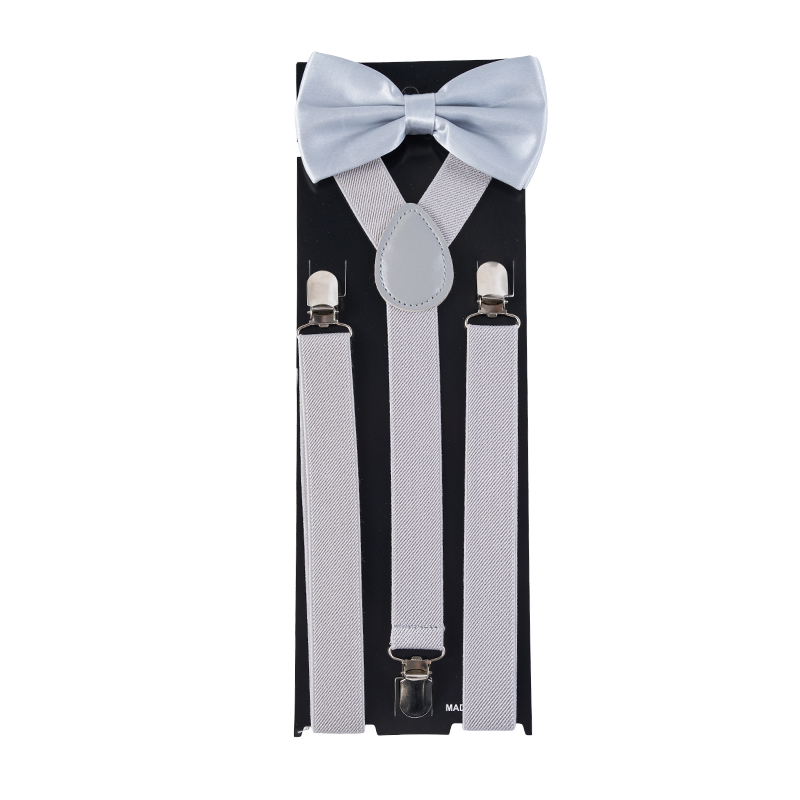
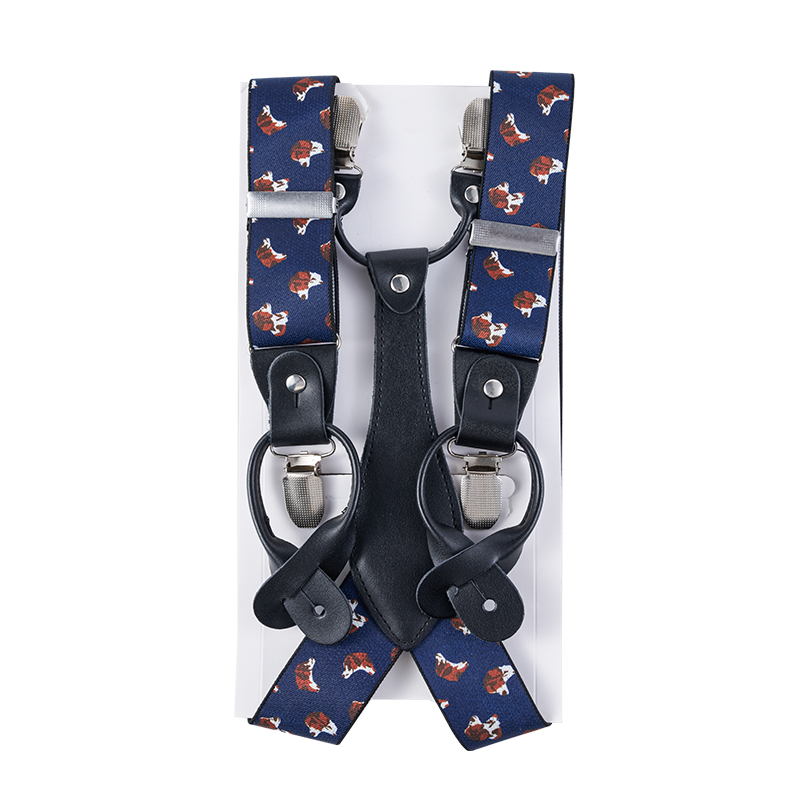
A standard pair is built from elastic or woven straps, sliders for adjustment, clips or leather tabs at the ends, and a connector piece in the back. Exact construction shifts depending on what the suspenders are meant for—a Y-back shape leans toward a cleaner, more refined look, while an X-back shape spreads the support wider across the shoulders for a sturdier hold.
You'll find suspenders across menswear, uniforms, wedding attire, stage costumes, kidswear, performance outfits, and general fashion accessories. What makes a pair worth wearing comes down to a mix of function and finish: it should hold steady without slipping, adjust smoothly when needed, stretch comfortably rather than pull, and look neat at every connection point.
Key Features and Materials
Suspenders might read as a simple accessory, but getting them right comes down to material choice and how carefully everything's assembled. The strap needs to stretch without sagging out of shape over time, the hardware needs a grip that actually holds, and the stitching has to survive being pulled and released hundreds of times without loosening.

Main Features of Well-Made Suspenders
A pair that's built properly tends to share these traits:
- Stretch that feels natural during movement, not restrictive
- Adjustable length to fit a range of body heights
- Clips or tabs that hold trousers firmly in place
- Sliders that adjust smoothly without sticking
- Elastic that keeps its recovery even after repeated stretching
- Reinforced stitching at the points that take the most stress
- A clean surface finish that works for either formal or casual styling
- Room for custom colors and branding when developed for apparel collections
What matters most shifts depending on where the suspenders end up. Formal wear calls for a refined look and tidy detailing above all else. Uniforms need stronger hold and materials that can take daily wear over the long run. Kids' suspenders lean toward lightweight hardware and softer materials, since comfort matters more than heavy-duty performance at that stage.
Common Strap Materials
The strap material determines comfort, stretch, visual texture, and product positioning.
| Material |
Characteristics |
Common Use |
| Elastic Polyester Webbing |
Good flexibility, stable color, strong recovery |
Daily wear, menswear, uniforms |
| Cotton-Blend Webbing |
Softer touch, natural surface texture |
Casual styles, fashion collections |
| Jacquard Elastic Webbing |
Supports patterns and woven designs |
Custom Suspenders, branded styles |
| Nylon Webbing |
Strong and wear-resistant |
Utility, performance, and work-related apparel |
Elastic polyester webbing is one of the most common choices because it offers good stretch recovery and color stability. Cotton-blend webbing provides a softer hand feel and is often chosen for fashion-oriented suspenders. Jacquard elastic can include woven patterns or brand elements, making it suitable for distinctive custom designs.
Common strap widths include 2.5 cm, 3.2 cm, and 3.8 cm. A 2.5 cm strap creates a lighter and more fashionable look. A 3.2 cm strap is suitable for standard adult designs. A 3.8 cm strap provides stronger support and is often used for uniforms or more functional styles.
Hardware and Connector Materials
How well suspenders perform really comes down to the hardware. Clips, sliders, and connectors need to move smoothly and hold fabric firmly, without chewing through the material over time.
Common hardware choices include:
- Zinc alloy clips, for a firm grip and finishing that holds up
- Plastic adjusters, when the priority is lighter weight and lower cost
- Metal sliders, for smoother adjustment and added strength
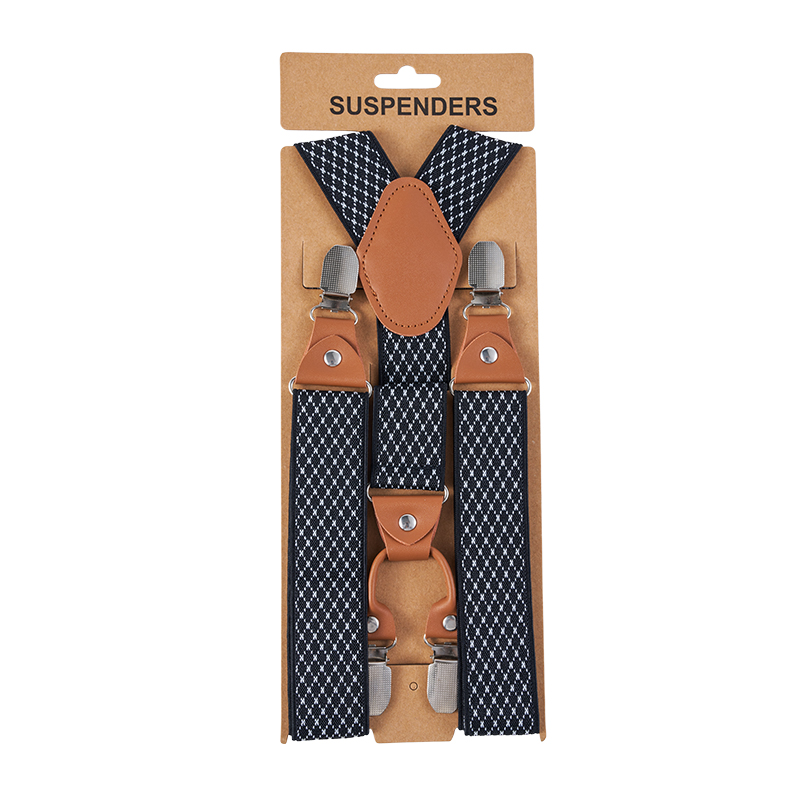
- Leather end tabs, typically for button-end or more classic formal styles
- PU leather tabs, a way to get a fashion look while keeping material cost down
- Leather Y-connectors, for a more refined rear detail
- Metal connectors, better suited to modern or utility-style builds
Clips in particular need to strike a balance—clamping the fabric securely without damaging the fibers. That comes down to spring tension that's neither too loose nor too tight, edges that are smooth rather than sharp, and plating that stays stable over time. When clips are made poorly, they tend to slip, bend, rust, or leave marks on trousers—problems that show up fast once someone's actually wearing them.
Manufacturing Process
Getting a pair of suspenders from raw material to finished product involves several steps along the way:
- Selecting webbing based on stretch, width, texture, and color
- Cutting straps to the correct length
- Matching hardware—clips, sliders, connectors—to the design
- Sewing and reinforcing the stress points
- Testing sliders for smooth adjustment
- Checking elastic recovery after repeated stretching
- Testing clips for opening, closing, and grip strength
- Running a final inspection before packaging
Yonger Belt runs elastic decay checks and clip cycle testing as part of evaluating how reliable a finished pair actually is. Beyond that, each pair gets looked over for skipped stitches, clip alignment, how smoothly the sliders move, surface cleanliness, and overall finish quality.
Styles and Applications
Suspenders come in a range of structures and looks, and each variation tends to fit a particular function, appearance, and clothing category better than the others.
Classic Suspenders
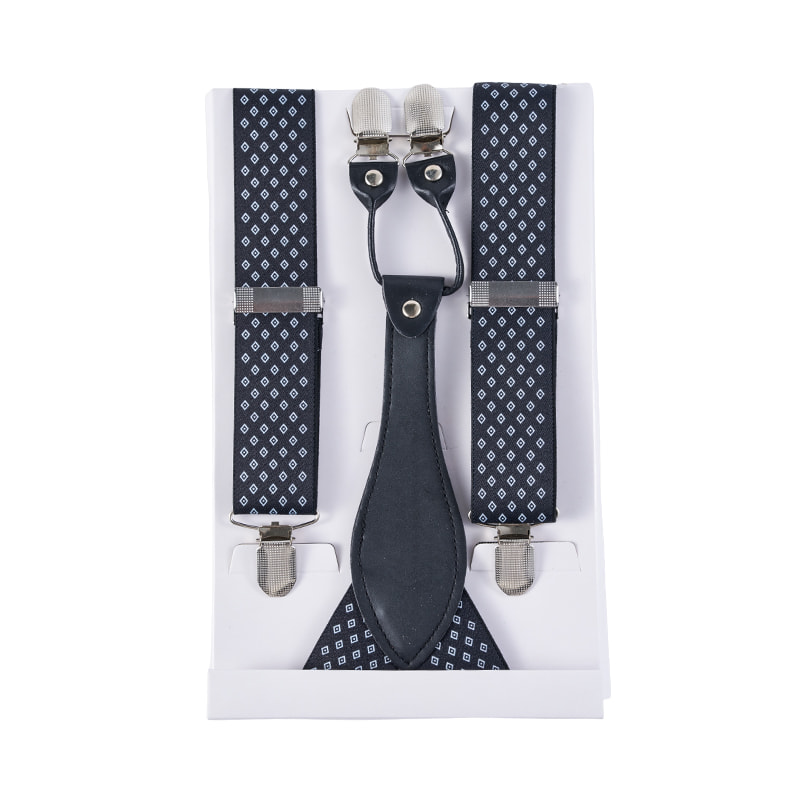
Classic suspenders stick to solid colors, understated hardware, and a fairly traditional build. Black, navy, grey, brown, burgundy, beige, and white cover most of what people ask for.
They tend to work well for:
- Suits and formal trousers
- Wedding outfits
- Business clothing
- Vintage-inspired fashion
- Gentleman-style accessories
- Tailored apparel
Most classic designs rely on leather button tabs, polished metal clips, or a convertible setup that lets you switch between clip-on and button-end use. What ties it together is a look that stays neat, balanced, and doesn't feel tied to any particular trend.
Clip-On Suspenders
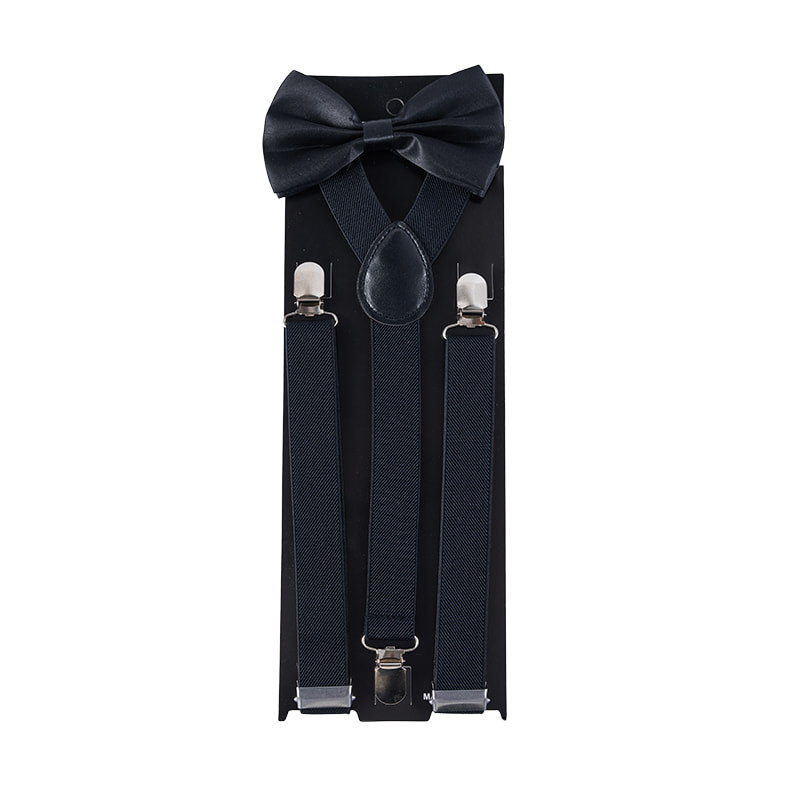
Clip-on suspenders attach straight to the trouser waistband using metal clips—no buttons needed on the trousers themselves, which makes them simpler to put on and take off.
This style shows up most often in:
- Daily clothing
- Casual fashion
- Costumes
- Children's outfits
- Stage apparel
- Seasonal accessory collections
For clip-on designs, the clip itself is really what determines quality. It should open easily, hold up through repeated use without loosening, and stay smooth enough that it doesn't scratch or snag the fabric underneath.
Button-End Suspenders
Button-end suspenders connect through leather or PU tabs to buttons sewn inside the waistband—a more traditional setup that's common in formal menswear.
They fit naturally with:
- Premium trousers
- Formal suits
- Wedding clothing
- Tailoring shops
- Vintage apparel collections
The leather tabs need punched holes placed accurately, edges that are smooth rather than rough, and stitching that holds firm. Leather that's too stiff ends up uncomfortable against the body; leather that's too thin tends to tear after enough wear.
Y-Back Suspenders
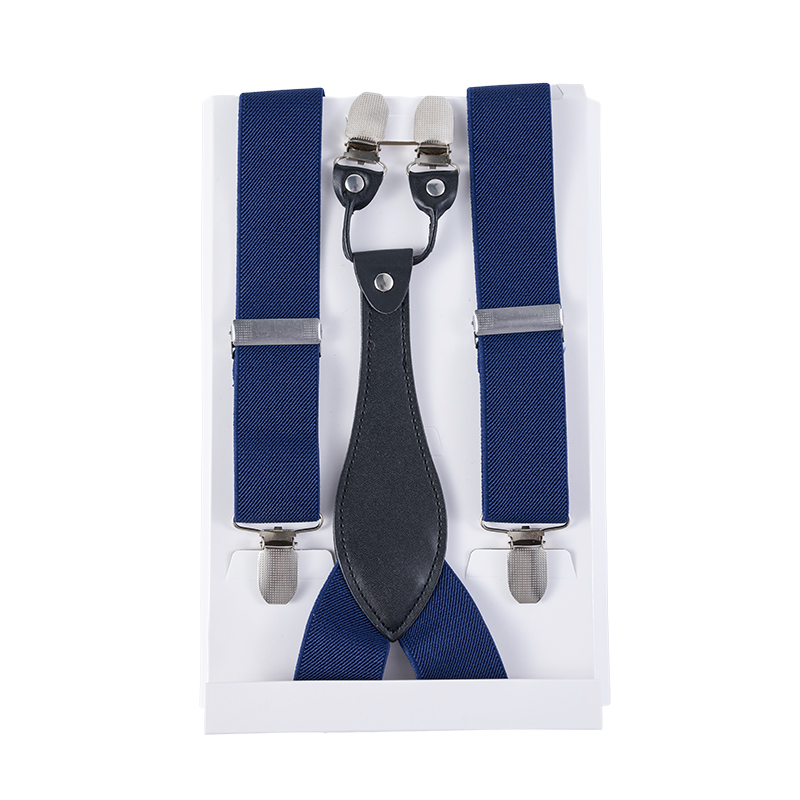
Y-back suspenders merge into a single strap at the back, usually through a leather or metal Y-connector. The result is a cleaner rear view, which is why this shape shows up so often in formal designs.
What it offers:
- A more elegant look overall
- Comfortable support across the shoulders
- A natural fit with suits and formalwear
- Good pairing with leather rear connectors
Since the rear connector carries most of the tension during wear, both the stitching and the material strength at that point need to be handled carefully.
X-Back Suspenders
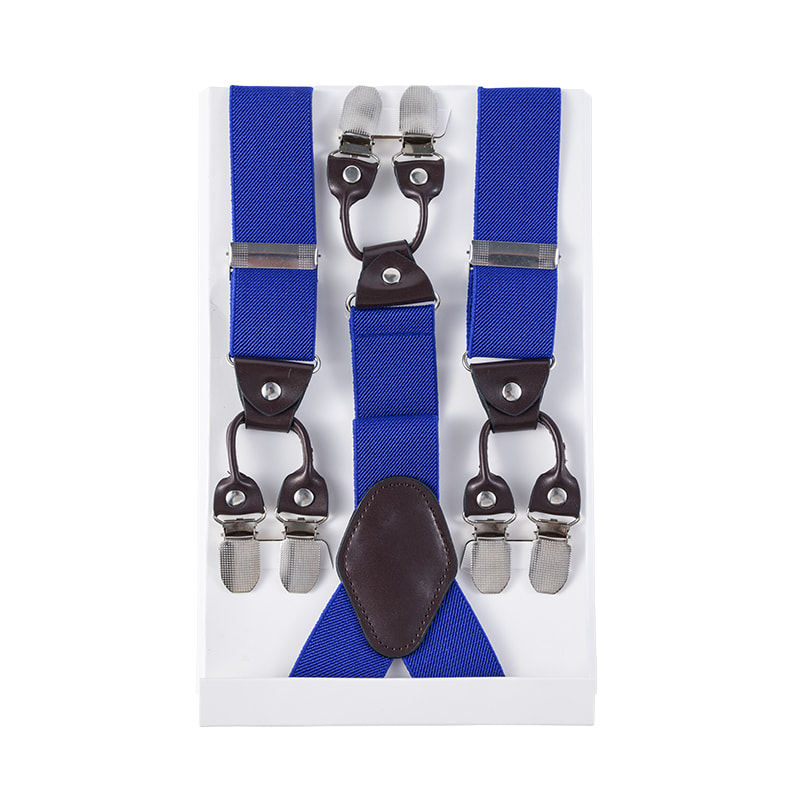
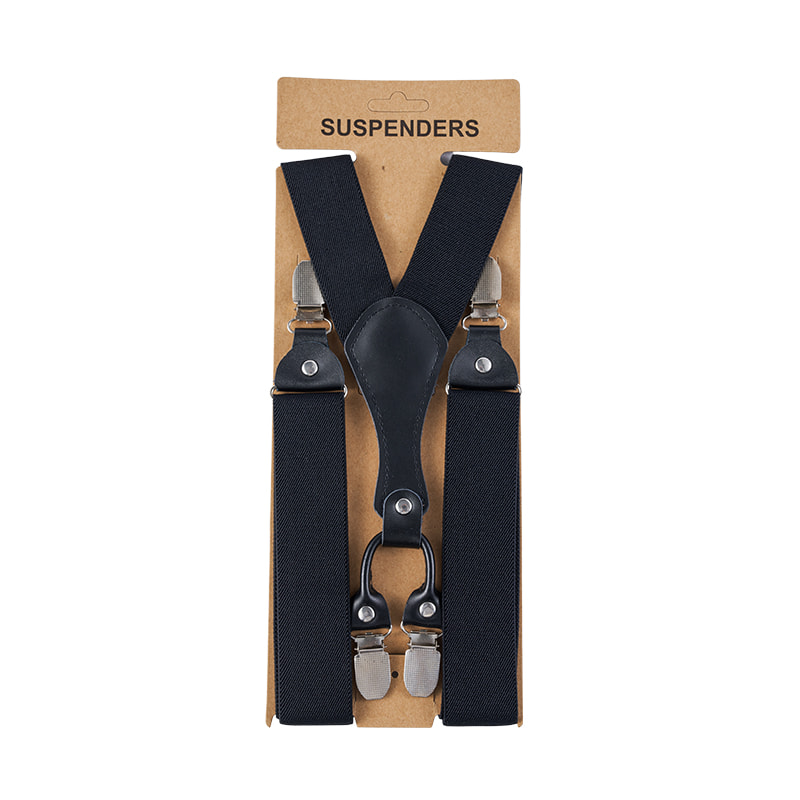
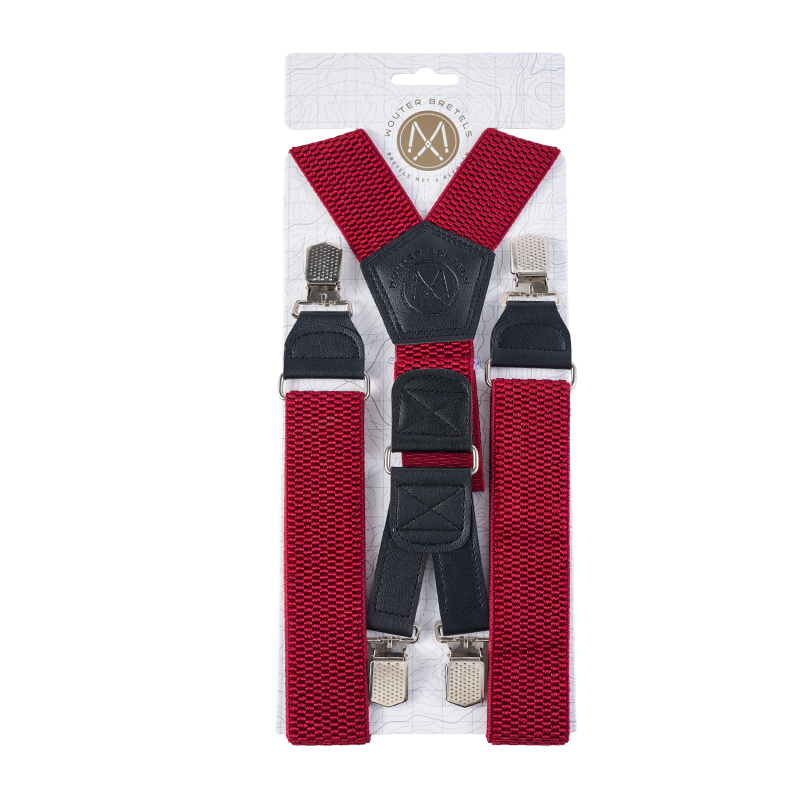
X-back suspenders cross behind the shoulders and typically use four clips instead of two. This shape gives a more stable hold, which is why it turns up so often in uniforms and utility or functional clothing.
What it offers:
- Stronger hold overall
- Better stability while moving
- A good match for wider straps
- Practical use in performance garments and uniforms
For this style, keeping the crossing symmetrical, the clips evenly placed, and the strap adjustment smooth all matter for how well it actually performs.
Application Scenarios
Suspenders find their way into quite a few clothing and accessory categories:
- Menswear and formalwear
- Wedding apparel
- Uniform programs
- Performance clothing
- Children's fashion
- Stage and costume apparel
- Casual styling accessories
- Gift and seasonal fashion sets
- Private label accessory lines
Given how lightweight, functional, and visually distinct suspenders are, they adapt fairly easily to a wide range of fashion and apparel concepts.
Customization Options
Working directly with a suspenders manufacturer opens up a fair amount of flexibility on custom development—material, structure, color, size, logo placement, and packaging can all be adjusted to fit a specific project.
Yonger Belt covers custom design, OEM/ODM production, material choices, color options, and sizing across different apparel and accessory projects.
Custom Design
Design-side customization can touch on:
- Strap width—2.5 cm, 3.2 cm, or 3.8 cm
- Y-back or X-back structure
- 3-clip or 4-clip construction
- Leather Y-connector or metal connector
- Clip-on, button-end, or convertible attachment
- Solid color, striped, printed, or jacquard webbing
- Front connector style
- Rear 3-hole or 4-hole adjuster system
The design really needs to match how the suspenders will actually be worn. Formal pieces typically call for finer metal parts and leather detailing, while uniform suspenders need stronger clips and webbing that can take daily abuse.
OEM/ODM Service
Yonger Belt supports both OEM and ODM development, depending on where a brand is starting from.
OEM means production follows something that already exists—a sample, a drawing, a brand spec, a technical file.
ODM means the factory gets involved earlier, helping with material recommendations, structure planning, and building out samples from a general design direction.
This setup works for apparel brands, uniform companies, fashion accessory labels, performance clothing developers, and retail accessory programs looking to build suspenders around their own identity rather than a generic template.
Material Options
Materials available for development include:
- Elastic polyester webbing
- Cotton-blend webbing
- Jacquard elastic webbing
- Nylon webbing
- Genuine leather end tabs
- PU leather details
- Zinc alloy clips
- Plastic adjusters
- Metal sliders
- Leather Y-connectors
- Metal connectors
The right material really depends on the target style. Classic designs tend to lean on leather details and metal hardware, casual styles often go for colorful elastic or printed webbing, and uniform suspenders usually need wider straps paired with stronger clips.
Color Options
Standard and custom color options are both available.
Common choices include:
- Black
- Navy
- Grey
- Brown
- Beige
- White
- Burgundy
- Red
- Green
- Custom Pantone matching
Formalwear tends to stick with dark, neutral tones. Wedding apparel might get matched to a seasonal palette instead. Stage and performance clothing can go the other direction entirely, with brighter colors and patterns that stand out under lights.
Size Customization
Fit and comfort come down to sizing, and suspenders can be developed for:
- Children
- Teenagers
- Standard adult sizing
- Plus-size fitting
- Extra-long fitting
- Specific regional size preferences
A rear 3-hole or 4-hole adjuster helps account for different heights, and adjustable slides give the wearer room to fine-tune the length once they've got them on.
Why Choose Yonger Belt Manufacturer?
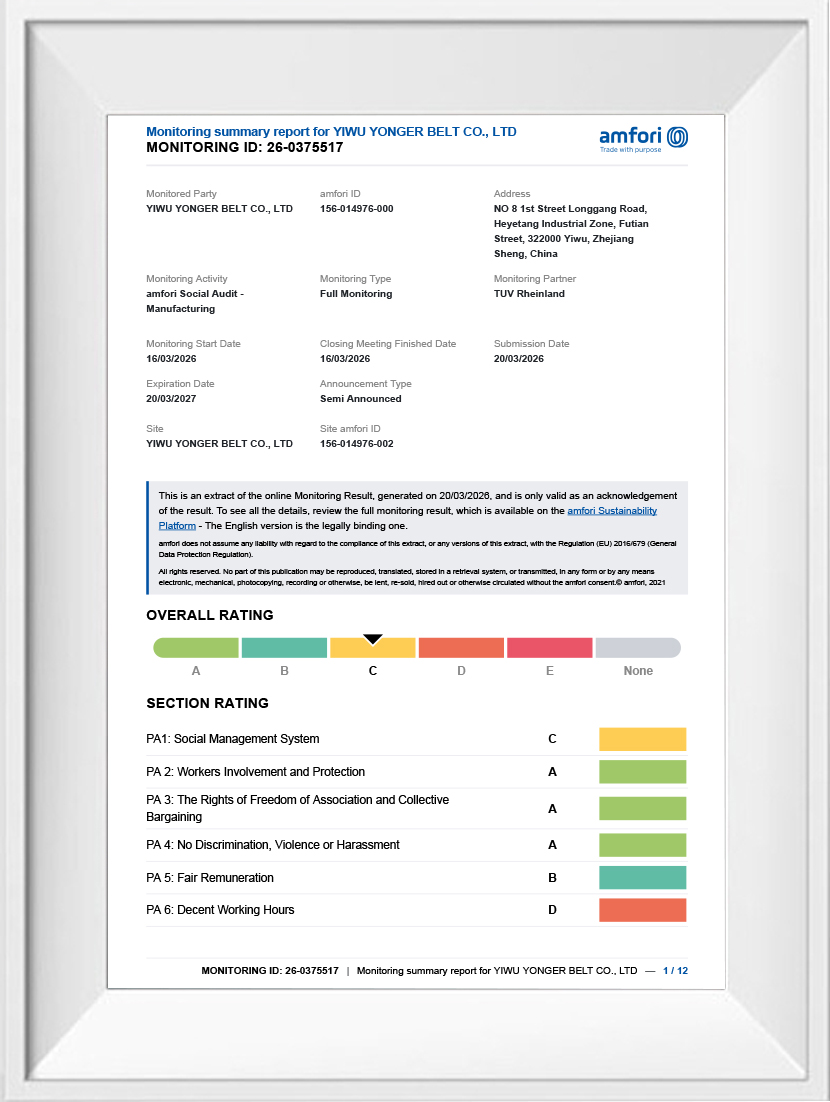
Picking a suspenders manufacturer worth working with means looking past style options alone—material behavior, hardware performance, sewing quality, and how the product holds up over time all matter just as much. Yonger Belt brings both fashion accessory background and factory-level production control to that equation.
Experience in Fashion Accessories
Yiwu Yonger Belt Co., Ltd. has spent more than 18 years making belts and related accessories, which has built up a fairly deep working knowledge of webbing, elastic materials, leather components, metal hardware, stitching, packaging, and what international buyers typically expect on the quality side.
The range covers men's belts, women's belts, children's belts, webbing belts, chain belts, and suspenders. Having worked across all of these gives the team a clearer sense of which materials and structures actually suit a given apparel use, rather than guessing.
Professional Quality Control
Suspenders need to keep performing the same way after hundreds of wears, not just look good on day one. That's the focus behind the checks Yonger Belt runs—each one tied to something that affects comfort or durability down the line.
Inspection covers:
- Elastic recovery and how it decays over repeated use
- Clip opening and closing performance across cycles
- Clip grip strength and alignment
- How smoothly the adjustment slides move
- Consistency in strap length
- Strength at the connector points
- Skipped stitches or loose threads
- Surface cleanliness
- Accuracy in packaging
Checking every pair before it ships is what catches problems early—clips that slip, straps that come out uneven, stitching that's weaker than it should be, adjustment that sticks, or finishing that just doesn't look right.
Compliance and Material Awareness
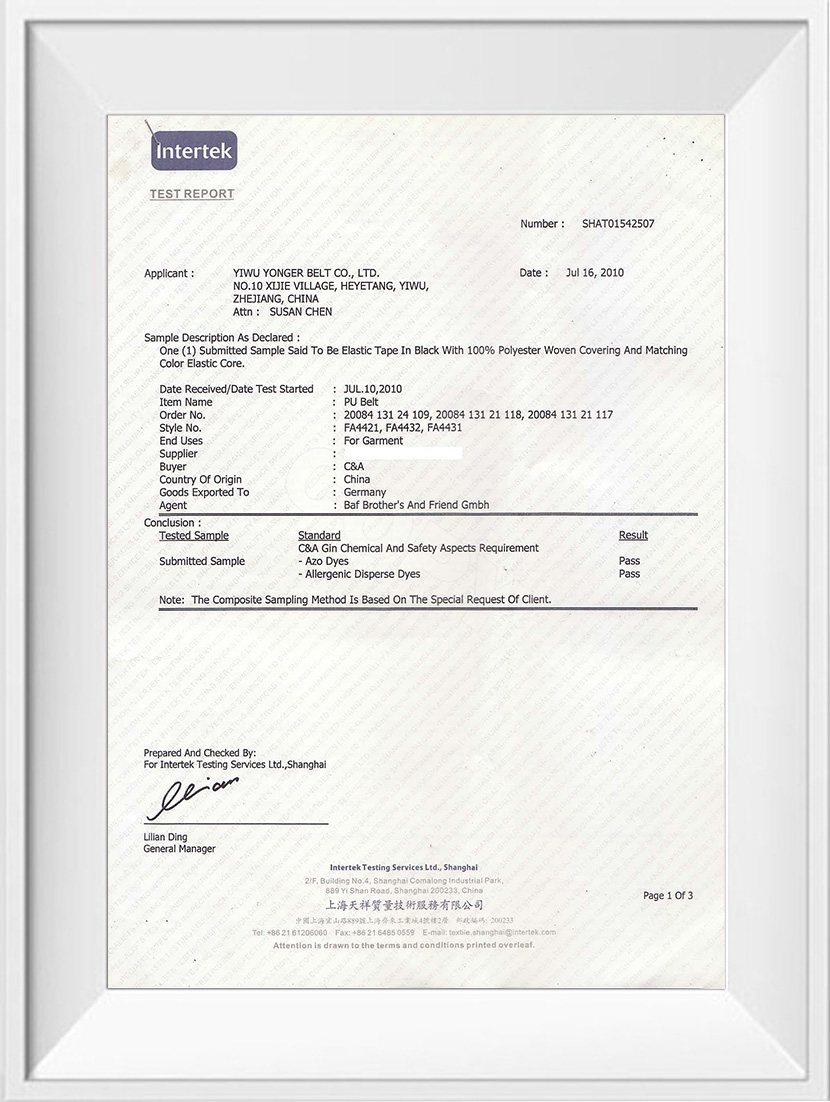
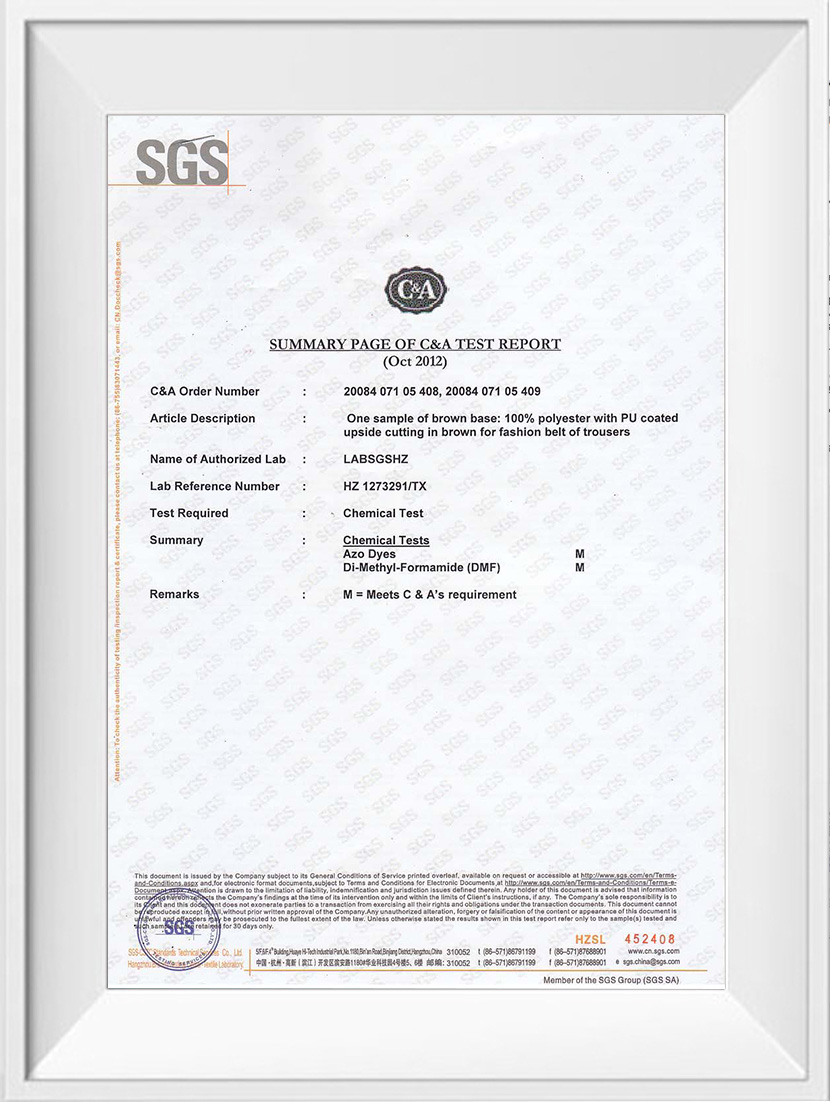
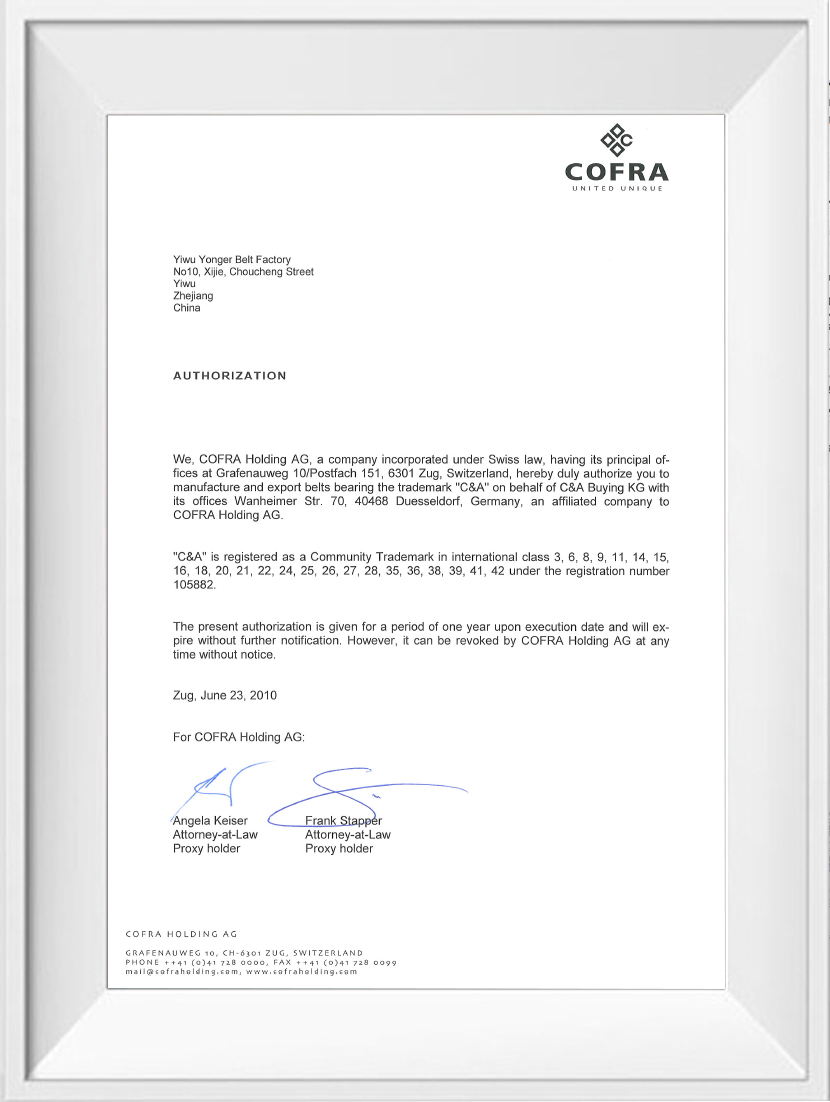
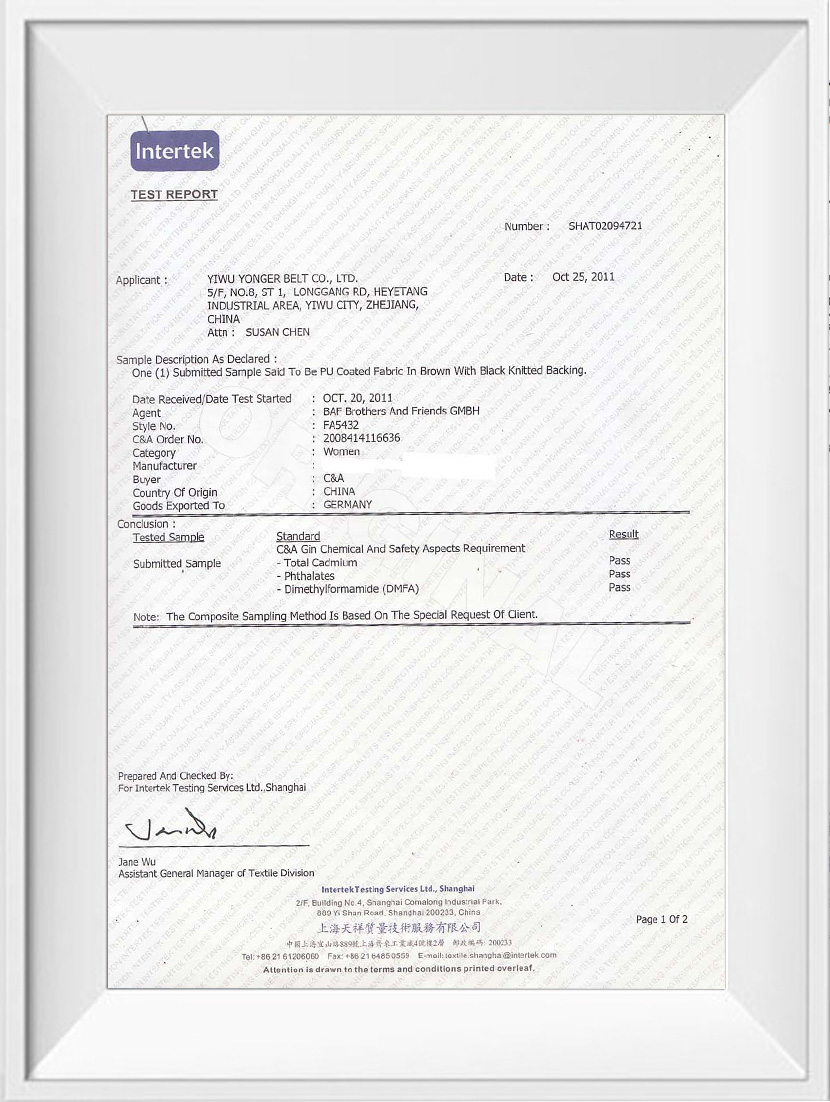
Accessories headed for international markets usually need to clear certain material safety standards. Yonger Belt keeps an eye on restricted substances—AZO, nickel, DMFa, cadmium, phthalates, disperse dyes, and other regulated compounds that show up on compliance checklists.
For suspenders specifically, this matters most around metal clips, plated hardware, leather tabs, PU components, dyed webbing, and any printed detailing. Careful material selection and keeping suppliers accountable is really what keeps the finished product both safe and consistent batch to batch.
Practical Custom Development
Yonger Belt works with brands from the early concept stage through to a finished product, offering input on:
- Strap material choices
- Hardware selection
- Matching clips and adjusters
- Color development
- Logo placement
- Size planning
- Sample refinement
- Packaging design
For anyone looking into suspenders, custom suspenders, or classic suspenders, this kind of hands-on development support is often what separates a rough idea from something that's actually manufacturable—with clear specs and quality that holds up.
FAQ
1. What are suspenders used for?
Suspenders are used to keep trousers in place by connecting the waistband to the shoulders. They are commonly used in formalwear, menswear, uniforms, wedding clothing, children’s outfits, stage apparel, and performance garments.
2. What materials are best for suspenders?
Elastic polyester webbing is widely used because it offers good stretch recovery and color stability. Cotton-blend webbing provides a softer touch, while jacquard elastic is suitable for patterned or branded designs. Zinc alloy clips, leather tabs, and metal sliders are often used for higher durability.
3. What is the difference between Classic Suspenders and fashion suspenders?
Classic Suspenders usually use solid colors, refined hardware, leather details, and traditional Y-back or button-end structures. Fashion suspenders may use brighter colors, printed patterns, unique webbing, decorative connectors, or lighter components.
4. Can Custom Suspenders include logo and packaging?
Yes. Custom Suspenders can include woven labels, printed logos, woven logo straps, embossed leather patches, custom hangtags, dedicated packaging bags, and retail presentation cards. The best method depends on the strap material and design style.
5. How can suspenders quality be evaluated?
Suspenders quality can be evaluated by checking elastic recovery, clip grip strength, adjustment smoothness, stitching density, connector strength, strap symmetry, hardware finish, and overall comfort. Reliable production should include testing and inspection before shipment.



 English
  русский
  Español
  Deutsch