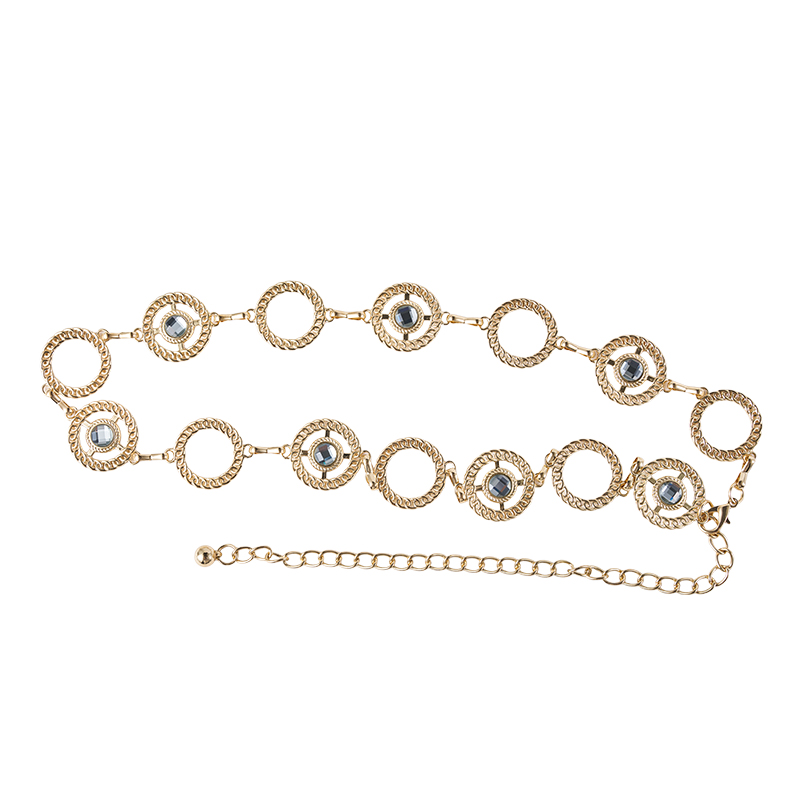
The Gold Tone Linked Circle Chain Belt is a statement-making accessory that adds instant glamour to any outfit. Featuring organically shaped gold-tone circles linked together to form a stunning chain.
Key Feature: The defining design of alternating large and small gold-tone circular links creates a rhythmic pattern that catches the light and draws attention to the waist. The secure lobster-claw clasp ensures reliable fastening, allowing for versatile styling at the waist or hip.
Key Applications: Ideal for pairing with jeans, bodycon dresses, jumpsuits, and high-waisted trousers.
This belt is made up of interlocking circular discs finished in a warm gold tone, so the surface catches light as you move rather than sitting flat and static. It works over jeans, a fitted dress, a jumpsuit, high-waisted pants, or a skirt, and holds up just as well as an accent piece for dressier occasions.
It's built from zinc alloy, which keeps the weight manageable — you won't feel it dragging at your waist after a few hours. The lobster clasp pairs with an adjustable chain, so you can shift it higher or lower depending on how you want it to sit, and the disc-link construction gives it a bit more dimension than a standard flat belt.
Product Features
This chain belt brings a metallic, structured detail to modern outfits, with a design that holds up well across different styling occasions.
Interlocking Disc Design
Rows of circular discs connect end to end, forming a repeating pattern that draws the eye toward the waist and adds a bit of shine without overwhelming the outfit.
Warm Metallic Finish
The surface has an electroplated coating that gives it a soft golden glow — dressed-down enough for daytime wear, but with enough polish to work for evening looks too.
Adjustable Clasp Closure
A lobster-claw clasp connects to a chain section that can be shortened or lengthened, so the belt sits comfortably whether you're wearing it at the natural waist or lower on the hip.
Zinc Alloy Build
Made from zinc alloy, the belt holds its shape without feeling heavy — it keeps its form through regular wear rather than sagging or losing structure over time.
Slim, Low-Profile Shape
Because it's narrow rather than wide, the belt layers easily over trousers, dresses, skirts, or jumpsuits without adding extra bulk around the waistline.
Flexible Styling Range
It fits into a range of looks — from relaxed daytime outfits to resort-style dressing and slightly dressed-up occasions — without feeling out of place in any of them.
Resistant to Everyday Wear
The plated finish on the zinc alloy base helps the belt resist tarnishing, so the color and shine stay consistent even with regular use.
Quality Assurance
Plating Coverage
The gold-tone surface is examined for even coverage and consistent color across every link, along with how well the coating adheres and resists fading over time.
Link Connection
Each circular disc is checked to confirm it connects firmly to the next, so the chain moves smoothly without loosening or shifting out of place during wear.
Flex Durability
The zinc alloy components are tested through repeated bending — up to 15,000 cycles — to confirm the belt holds its shape and function well beyond typical daily use.
Clasp Function
The lobster-claw clasp is tested for a secure close, easy one-handed operation, and consistent performance after repeated opening and closing.
Surface Finish
Each link gets a closer look to catch any rough spots, burrs, or sharp edges before they make it into the finished piece.
Oxidation Resistance
Salt spray testing helps confirm how the plating holds up against moisture and air exposure over extended periods, reducing the risk of surface discoloration.
This belt is also built to meet a set of recognized safety and environmental standards for fashion accessories:
Phthalates-Free, supporting safer chemical composition
Nickel-Free, reducing the risk of skin irritation for sensitive wearers
APEO-Free, in line with ISO 18254 requirements
REACH Compliant, meeting European regulatory standards
RoHS Compliant, aligned with requirements across the EU and North America
FAQ
Q1: What is the Gold Tone Linked Circle Chain Belt made of?
The belt is made from zinc alloy chain links with interconnected circular discs and a gold-tone electroplated finish.
Q2: Is this gold circle chain belt adjustable?
Yes. It features a lobster-claw clasp with an adjustable chain mechanism, allowing flexible waist or hip styling.
Q3: What lengths are available for this circle link chain belt?
Typical length options include 95 cm, 105 cm, 115 cm, and 125 cm. The length can also be customized according to styling needs.
Q4: Can the finish be customized?
Yes. Available finish options include gold-tone, silver-tone, antique, brushed, matte, polished, PVD-coated, and two-tone designs.
Q5: Is this belt suitable for sensitive skin?
Yes. The belt can meet Nickel-Free and Phthalates-Free requirements and also supports APEO-Free, REACH, and RoHS compliance.
Q6: How durable is the chain structure?
The belt uses zinc alloy components and undergoes flex cycle testing. Premium components can withstand up to 15,000 flex cycles without degradation.
Q7: What outfits does this gold link chain belt match?
It pairs well with jeans, bodycon dresses, jumpsuits, high-waisted trousers, skirts, maxi dresses, party looks, resort outfits, and contemporary fashion styling.
Style: Contemporary fashion / Statement accessory
Closure Type: Lobster-claw clasp with adjustable chain mechanism
Buckle Material: Zinc alloy with gold-tone electroplated finish
Belt Material: Zinc alloy chain links with interconnected circular discs
Width: Skinny profile – designed to sit comfortably at waist or hip
Colour: Gold-tone (primary); silver-tone available upon request
Product Characteristics: Lightweight, durable, versatile for casual and formal wear, corrosion-resistant construction
Place of Origin: Zhejiang, China
Q1: What is the MOQ for a trial order of the Gold Tone Linked Circle Chain Belt?
We offer ultra-flexible trial quantities starting from 2-12 pieces for standard designs, allowing you to test the market with minimal investment. For fully customised orders, MOQ varies by complexity. Please contact us to discuss your specific needs.
Q2: Can I customise the circle link design and chain style?
Yes. We offer full OEM/ODM customisation for the Gold Tone Linked Circle Chain Belt, including circle shape, link size, surface finish, and plating colour. Custom engraving for branding is also available.
Q3: How durable is the gold plating? Will it tarnish?
Our chain belts use zinc alloy bases with multi-layer electroplating for enhanced durability. We conduct salt spray tests (48-72 hours) to ensure plating quality. For premium requirements, we offer PVD coating, which provides superior corrosion resistance and longer-lasting shine.
Q4: What safety standards does this belt meet?
The Gold Tone Linked Circle Chain Belt is certified to be Nickel-Free, Phthalates-Free, and complies with REACH and RoHS regulations for EU and North American markets, ensuring skin safety and environmental compliance.
Q5: How long does production take for a bulk order?
Sample production takes 7-10 days. Mass production typically requires 20-45 days after order confirmation, depending on order volume and customisation complexity.
Minimum Order Quantity (MOQ)
Standard Trial Orders: 10-600 pieces – ultra-flexible for market testing and initial sampling of the Gold Tone Linked Circle Chain Belt
Volume Orders: Bulk pricing for larger quantities; optimal value at 500-1,000+ pieces
OEM Orders (Full Branding): Customisation MOQ varies by complexity; typically 200 pieces for custom designs; no minimum for stock logo branding
Production Lead Time
Sample Production: Typically 7–10 days for the Gold Tone Linked Circle Chain Belt
Mass Production: Approximately 20-25 days for standard orders; 25-45 days for fully customised orders, depending on order volume and customisation complexity
Logistics & Packaging
Standard Packaging: Each piece packed in an OPP bag, then securely cartoned for bulk orders. Single package dimensions: 15 x 12 x 2.5 cm; unit gross weight: 0.150 kg.
Custom Packaging: Private label, premium boxes, and branded packaging solutions available upon request.
Shipping: FOB, CIF, and other shipping terms negotiable. Shipping methods include by sea (25-40 days), by air, DHL, FEDEX, UPS, and TNT (3-7 days).
Payment Terms
T/T (30% deposit, 70% balance before shipment)
Export Documentation
We provide full export compliance support, including necessary certifications like CE, RoHS, UKCA, and ETL where applicable.
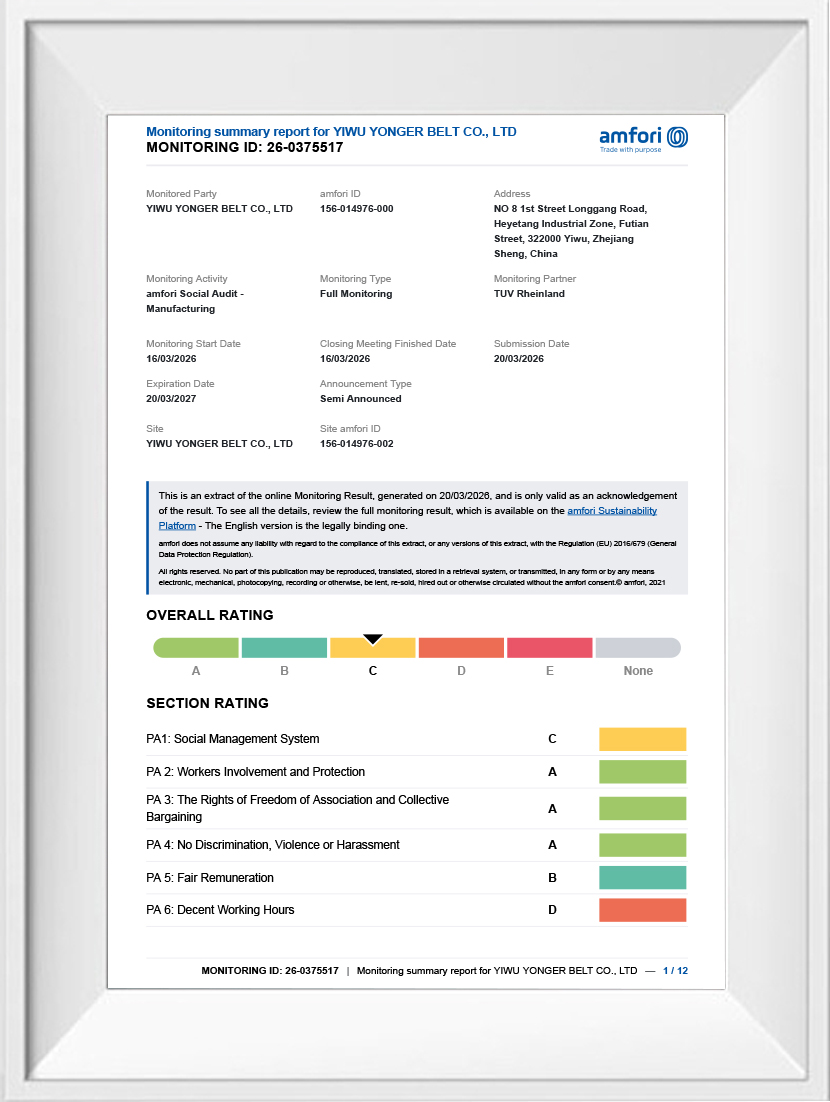
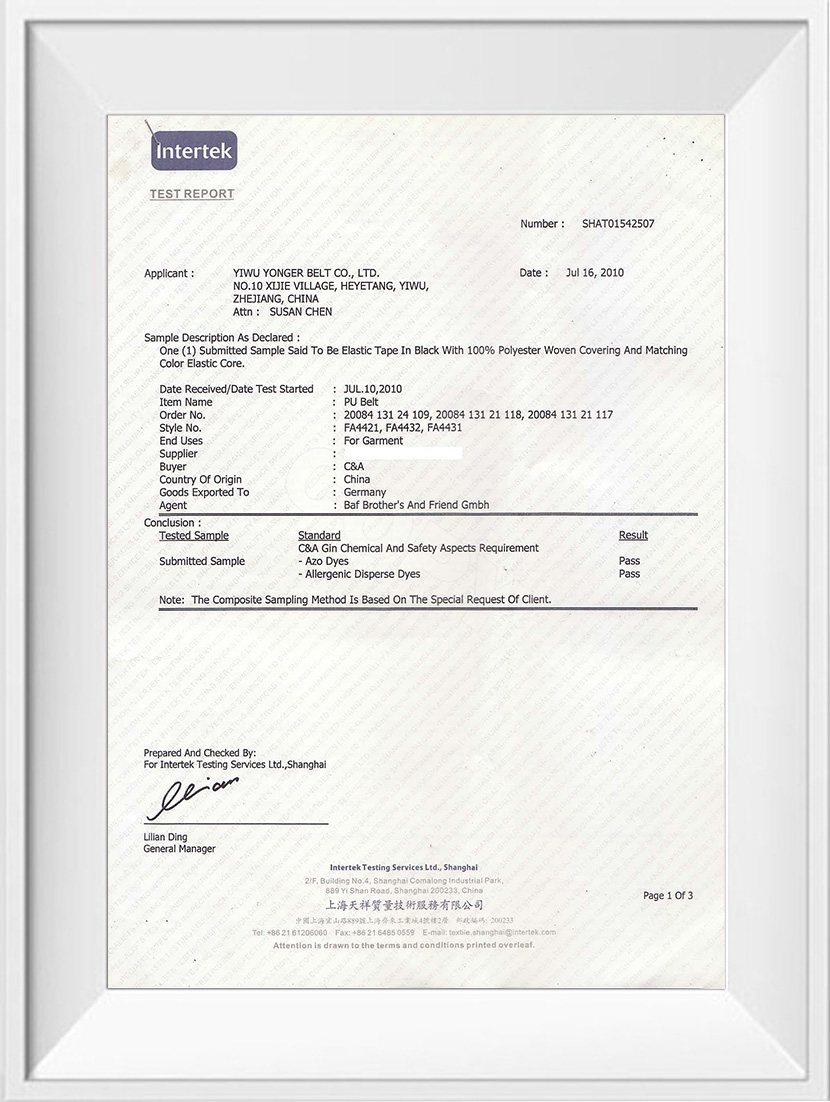
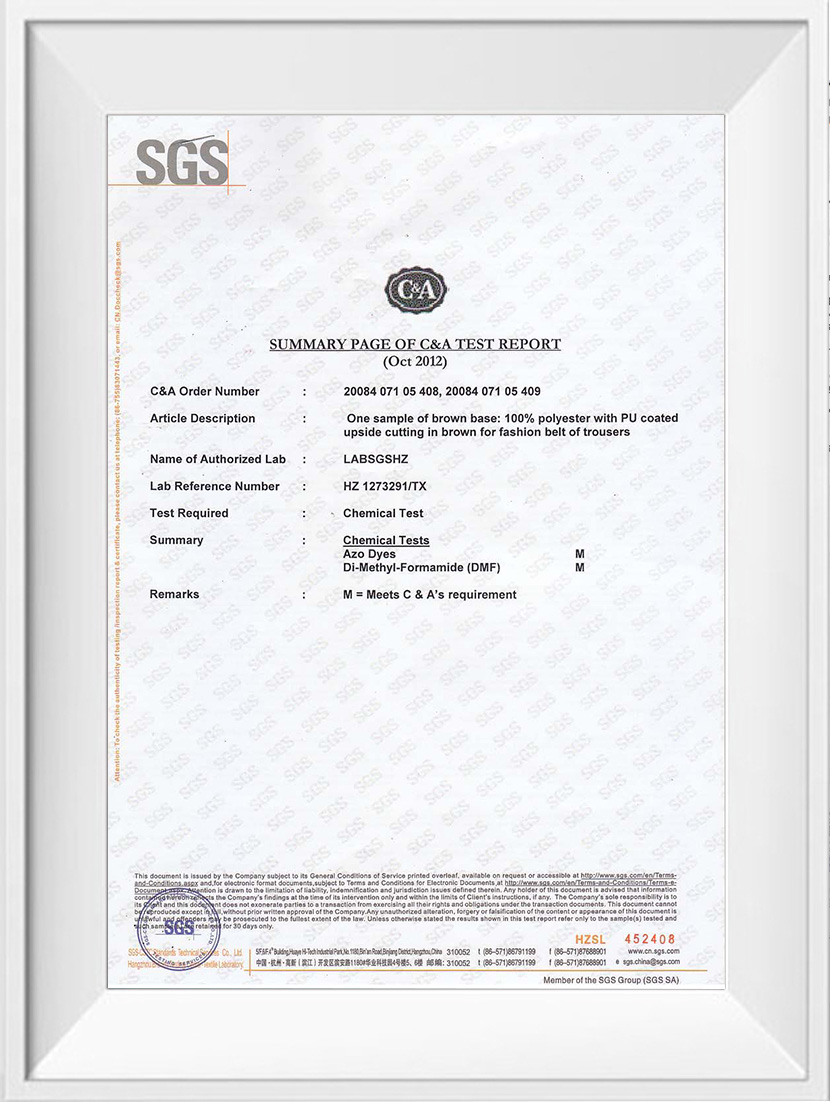
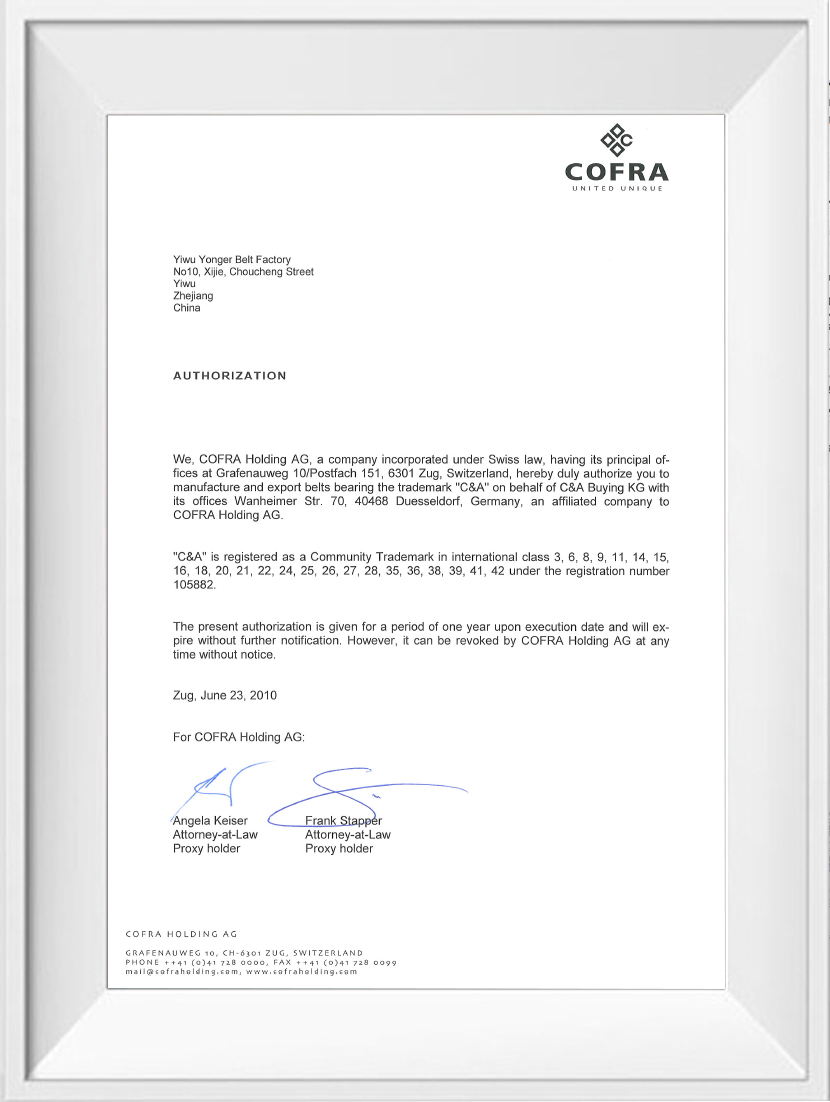
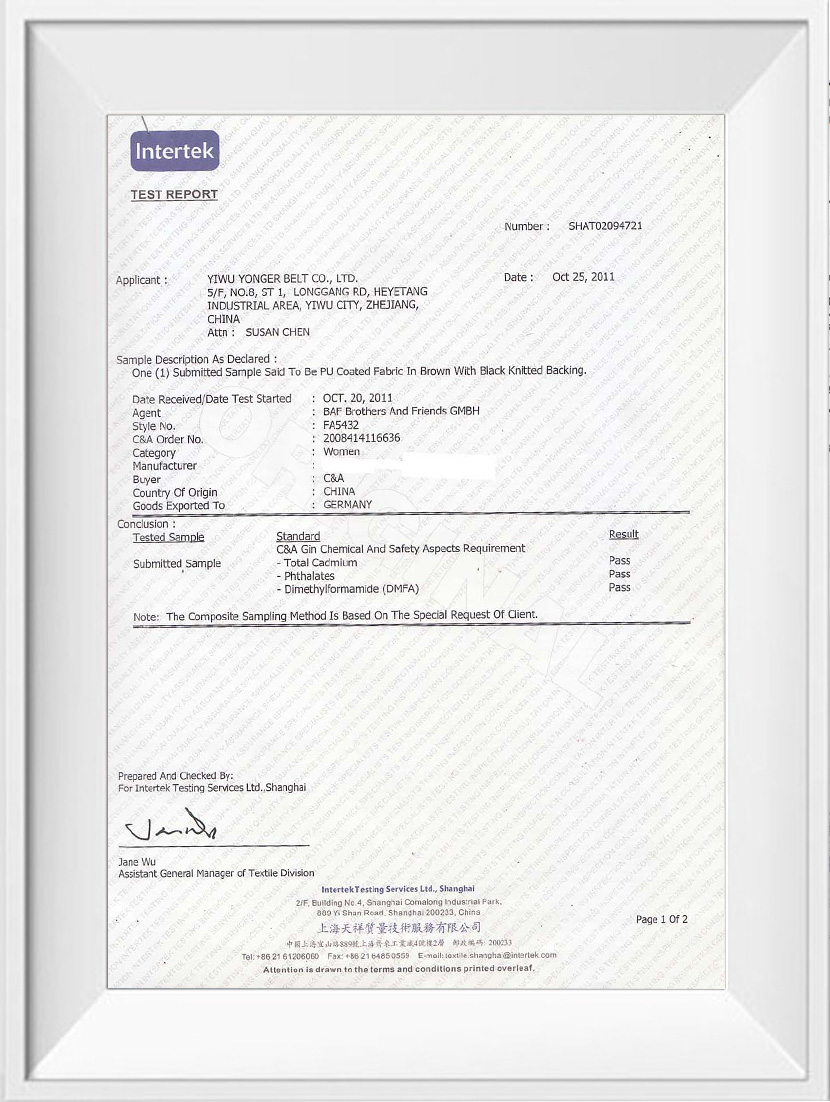
Yiwu Yonger Belt Co., Ltd. has specialized in manufacturing various fashion leather belts for over 18 years, with a monthly production capacity of up to 500,000 pieces.
Our main markets include Western Europe and North America. We have worked with well-known international brands such as C&A, ORSAY, NEXT, and FOREVER 21.
Our Gold Tone Linked Circle Chain Belt comply with the latest European standards, including requirements related to AZO, nickel, DMFa, cadmium, phthalates, disperse dyes, and other restricted substances. Quality is our top priority. We carry out strict supervision and inspection throughout the entire production process, as well as piece-by-piece inspection before packaging, to ensure consistent product quality.
As a Gold Link Chain Belt manfuacturer with our own factory, we offer competitive pricing and professional service, helping customers expand their markets together with us. With a wide range of designs and styles, we continuously develop new products to keep pace with market trends and seasonal demand. We are committed to working closely with our customers to achieve greater market success.
Industrial equipment often needs movement and force at the same time. A machine may need a simple source of motion for one part of its operation, while another part may need more controlled force. When these needs appear together, the relationship between different power systems becomes important.
Pneumatic systems use compressed air to create movement. Hydraulic systems use fluid to transmit force. Each approach has its own place in industrial equipment. Yet some machines need the characteristics of both.
This is where an Air Hydraulic Booster Cylinder can become part of the system. It connects pneumatic input with hydraulic output, allowing air pressure to be used to create hydraulic action. The cylinder is therefore not simply another type of actuator. It acts as a link between two ways of producing movement and force.
Understanding this relationship can help explain why air hydraulic booster cylinders appear in different industrial applications. Their value comes from how they fit into a wider machine rather than from the cylinder alone.
What Is an Air Hydraulic Booster Cylinder?
An Air Hydraulic Booster Cylinder is a device designed to combine pneumatic and hydraulic functions within one working arrangement.
The pneumatic side uses compressed air as the input source. The hydraulic side uses fluid to transfer the resulting force. The cylinder connects these two functions so that air-powered input can support hydraulic movement.
This basic idea can be useful when a machine already has access to compressed air but needs a different type of force or movement for a particular operation.
A conventional pneumatic cylinder can provide direct movement using compressed air. In some applications, however, the required action may benefit from hydraulic force. Instead of building two completely separate systems, cylinder can provide a connection between the two.
The product can therefore be viewed as an intermediate component. It receives pneumatic energy and uses that input within a hydraulic working section.
Its role becomes easier to understand when the two systems are considered separately:
System
General Function
Pneumatic System
Uses compressed air to provide input movement
Hydraulic System
Uses fluid to transfer and apply force
Air Hydraulic Booster Cylinder
Connects pneumatic input with hydraulic action
This relationship is the main feature of the product. It allows equipment designers to consider both pneumatic and hydraulic functions when developing a machine.
How Does an Air Hydraulic Booster Cylinder Connect Pneumatic and Hydraulic Functions?
The connection between the two systems is based on energy transfer.
Compressed air enters the pneumatic side of the device. The air movement acts on the internal mechanism and creates pressure within the hydraulic section. The hydraulic fluid then transfers this pressure to the working side.
The process can be understood as a sequence:
Compressed air enters the pneumatic section.
The air acts on the internal piston arrangement.
Movement from the pneumatic side creates hydraulic pressure.
Hydraulic fluid transfers the resulting force.
The working section produces the required movement or action.
The exact internal construction can vary between products, but the basic concept remains similar. Pneumatic energy provides the input, while hydraulic action delivers the working effect.
This arrangement creates a useful connection between two systems that normally operate in different ways.
Air is convenient for producing movement. Hydraulic fluid is useful when force needs to be transferred through a controlled fluid system. Bringing these functions together can give equipment designers another way to approach machine movement.
The booster cylinder therefore sits between the pneumatic source and the hydraulic action. Its position in the system explains its name and its practical role.
Why Would a Machine Need Both Pneumatic and Hydraulic Functions?
Different machine operations can create different requirements.
Pneumatic systems are often associated with straightforward movement. They can be useful for moving components, positioning parts, or operating mechanisms that do not require the characteristics of hydraulic action.
Hydraulic systems are often considered when a machine needs controlled force. The fluid-based working process can support applications where direct pneumatic movement does not provide the desired operating behavior.
A machine may therefore benefit from having both functions available.
For example, a production machine may use compressed air as part of its general operating system. Adding a separate hydraulic system could make the equipment more complicated. An air hydraulic booster cylinder can provide a way to introduce hydraulic action without treating the pneumatic and hydraulic systems as completely independent.
This can influence equipment layout as well.
The designer needs to consider where the cylinder will be installed, how it connects with the air source, how the hydraulic section interacts with the working mechanism, and how the resulting movement fits into the machine.
The relationship can be represented simply:
Compressed Air → Pneumatic Action → Hydraulic Pressure → Working Movement
This makes the booster cylinder part of a wider machine function rather than an isolated component.
Where Are Air Hydraulic Booster Cylinders Used?
The applications of an air hydraulic booster cylinder are connected with equipment that combines pneumatic availability with a need for hydraulic action.
Manufacturing machinery can be one area. Production equipment may include several moving sections, and different parts of the machine can have different force requirements.
Clamping equipment is another possible application. A machine may need a component to move into position and then apply force during the working process. The combination of pneumatic input and hydraulic action can support this type of operation.
Pressing and forming equipment can also involve similar needs. The machine may require a controlled working action while using compressed air as part of the available power source.
Material handling equipment may also use combined fluid power functions. Movement and positioning can be handled differently depending on the task.
Possible application areas include:
Application Area
Possible Role
Manufacturing Equipment
Supporting controlled machine movement
Clamping Equipment
Providing force during clamping operations
Pressing Equipment
Supporting working movement and force
Forming Machinery
Connecting pneumatic input with hydraulic action
Material Handling
Supporting movement and positioning
Automated Machinery
Providing an additional motion option
The exact application depends on the machine design. The important point is that the booster cylinder can be used where pneumatic and hydraulic functions need to work together.
How Does the Booster Cylinder Fit Into Machine Design?
A component can only perform its intended role when it fits properly into the equipment around it.
For an air hydraulic booster cylinder, this means considering the air supply, hydraulic working section, mechanical connection, and movement required by the machine.
The installation position can influence how the cylinder operates within the equipment. The designer may need to consider how the cylinder connects with other components and how its movement is transferred to the working mechanism.
Space is also part of the design process. Industrial machines often contain many components in one area. The booster cylinder needs to fit within the available arrangement without interfering with nearby parts.
The connection points matter as well. The pneumatic side needs to connect with the machine's air system. The hydraulic side needs to work with the relevant fluid circuit or working mechanism.
This creates several design relationships:
Air supply and pneumatic input
Hydraulic working section
Mechanical connection
Movement direction
Equipment layout
Access for installation and service
These relationships show why selecting a booster cylinder cannot be separated from machine design.
The component may be relatively compact compared with the complete machine, but its position can influence how different parts of the system interact.
Can an Air Hydraulic Booster Cylinder Support More Compact Equipment Design?
Equipment designers often need to balance function with available space. Adding separate systems for every type of movement can make a machine more complicated.
An air hydraulic booster cylinder offers another approach by connecting pneumatic and hydraulic functions through one component.
This does not mean that every machine needs such a device. Its usefulness depends on the application. Where both types of fluid power are already relevant, however, the combined arrangement can provide a practical design option.
The cylinder can allow a machine to use an existing pneumatic source while introducing hydraulic action where it is needed. This can reduce the need to treat every function as an entirely separate system.
The relationship is particularly interesting in machines where several operations happen within the same working area.
A machine might use compressed air for general movement and control while needing hydraulic force for a specific operation. In such a case, the booster cylinder can provide a bridge between the two functions.
This can also affect maintenance planning. Instead of viewing the pneumatic and hydraulic functions as unrelated systems, the equipment designer can consider how they meet at the booster cylinder.
The result is a more connected approach to machine layout. The cylinder becomes part of the overall system architecture.
What Should Buyers Consider When Choosing an Air Hydraulic Booster Cylinder?
Choosing an air hydraulic booster cylinder starts with understanding the machine rather than looking at the component alone.
The intended application should be clear. Buyers need to know what kind of movement the cylinder will support and what role hydraulic action will play in the working process.
The available pneumatic system is another consideration. Since the booster cylinder depends on pneumatic input, it needs to fit the existing equipment arrangement.
The hydraulic side also needs attention. The cylinder should work with the way hydraulic action is used within the machine.
Installation requirements are equally important. The physical arrangement of the machine can influence which product design is suitable.
Buyers may consider several areas:
Consideration
Related Question
Application
What movement or working action is required?
Pneumatic System
How will the cylinder receive air input?
Hydraulic Function
What role will hydraulic action perform?
Machine Layout
Where will the cylinder be installed?
Connection
How will it interact with surrounding components?
Maintenance
Can the working area be accessed when needed?
Clear product information can make communication between buyers and manufacturers easier.
For customized equipment, it can also help to provide details about the machine's working process. A manufacturer can better understand the intended role of the cylinder when the application is explained in practical terms.
How Can Manufacturers Support Different Air Hydraulic Booster Cylinder Applications?
Different machines may require different approaches to pneumatic and hydraulic integration. Manufacturers therefore need to understand more than the basic function of the cylinder.
Product development can begin with the intended application. The manufacturer considers how the cylinder will connect with the machine and what type of working action it needs to support.
The product structure can then be matched with the equipment arrangement. This includes the relationship between the pneumatic section, hydraulic section, connection points, and surrounding machine components.
Communication is especially important for industrial applications. A buyer may know what the machine needs to accomplish without knowing exactly how the internal cylinder arrangement should be designed.
The manufacturer can work from the application and translate those requirements into a suitable product concept.
This process can involve:
Application discussionUnderstanding the machine and its working process.
Product planningConsidering the relationship between pneumatic and hydraulic functions.
Design developmentCreating a cylinder arrangement that fits the intended equipment.
ProductionManufacturing and assembling the required components.
Application checkingReviewing whether the finished product matches the intended machine use.
This approach gives the Air Hydraulic Booster Cylinder a place within broader equipment development. It is not simply a component that provides force. It is a connection point between two fluid power concepts.
As industrial machines continue to combine different forms of motion and control, this type of component can remain relevant wherever pneumatic input and hydraulic action need to work together within the same equipment design.
A belt can look simple, but the way its buckle and strap work together has a direct effect on how it feels during regular wear. With a plate-style buckle, the strap does not simply serve as a strip around the waist. Its width, thickness, length, and position all need to work with the buckle so that the belt can be adjusted without unnecessary movement.
This becomes particularly noticeable when a belt is used repeatedly with different clothing. A strap that fits easily through the buckle may behave differently when paired with a thicker pair of trousers, while a buckle that feels comfortable in one position may sit differently when the belt is tightened or loosened. Small differences in construction can therefore affect everyday handling.
Looking at the relationship between the buckle and strap provides a practical way to assess fit. It also helps explain why measurement, adjustment, positioning, and routine care should be considered together rather than as separate concerns.
How Does the Plate Buckle Structure Secure the Belt Strap
The buckle is the part that connects the belt strap to the fastening position. In a plate-style design, the strap passes through or engages with the buckle area and is held in place through the way the buckle and strap interact. The shape of the plate, the available space, and the condition of the strap can all influence how the belt sits after fastening.
A useful way to look at the structure is to consider three areas:
The buckle plate provides the main fastening surface and influences how the belt is positioned.
The strap needs enough flexibility to pass through the fastening area while remaining stable after adjustment.
The connection area experiences repeated movement when the belt is put on, adjusted, and removed.
When these parts work together, adjustment can be carried out without forcing the strap into an awkward position. If the strap is too wide, too thick, or difficult to move through the buckle, the fastening process can become less convenient.
The buckle also affects where the belt begins and ends around the waist. This is why the buckle should not be considered separately from the strap. The two parts form one working system during everyday use.
Why Does Belt Strap Width Matter for a Plate Buckle
Width is easy to overlook because people often focus on waist size when choosing a belt. However, the strap also needs to fit the space provided by the buckle. A mismatch can affect how smoothly the strap moves and how evenly it sits once fastened.
A strap that is too wide may be difficult to feed through the buckle. It can also sit tightly against the edges of the fastening area. A narrower strap may have more room to move, which can allow the belt to shift rather than remain neatly positioned.
The relationship between strap width and buckle opening can be considered in several practical ways:
Consideration
What to check
Strap width
Whether it fits comfortably within the buckle
Edge position
Whether the strap sits evenly rather than pressing against one side
Movement
Whether the strap can be adjusted without excessive resistance
Belt loops
Whether the strap can pass through the loops without catching
This is particularly relevant when a belt is used with different trousers. Belt loops can vary in available space, so a strap that works comfortably with one garment may feel less convenient with another.
For a Plate Buckle Belt, width therefore affects more than appearance. It can influence how easily the belt is handled and how steadily it remains positioned during wear.
How Should You Measure for a Plate Buckle Belt
Measurement should reflect how the belt will actually be worn rather than relying only on a clothing label. The position around the waist, the clothing worn underneath the belt, and the amount of strap needed after fastening can all change the result.
One practical approach is to measure around the area where the belt normally sits. The tape should follow the same position used when wearing the belt instead of being placed at an unrelated point on the body. If a belt is intended to be worn over thicker clothing, that difference should also be considered.
An existing belt can provide another useful reference. Measure the portion that is normally used for fastening rather than simply measuring the full length from end to end. This gives a clearer indication of how the belt functions in actual use.
The end of the strap also deserves attention. Too little remaining length can make adjustment awkward, while excessive loose material may become inconvenient during wear.
Measurement point
Why it matters
Wearing position
Reflects where the belt will actually sit
Existing belt
Provides a practical reference for fit
Fastening position
Shows how much adjustment is normally used
Remaining strap
Helps avoid an awkward loose or short end
For a Plate Buckle Belt, measuring this way connects size selection with the actual fastening process. It avoids treating waist measurement as the only factor.
How Does a Plate Buckle Belt Allow Different Adjustment Positions
Once the basic size has been considered, adjustment determines how the belt feels during use. A plate-style buckle allows the strap to be positioned according to the wearer's needs rather than relying entirely on a fixed starting position.
The adjustment process should allow the strap to move smoothly and settle into a stable position. If the belt requires excessive force to move, the strap may not be well matched to the buckle. If it moves too freely, keeping the desired position can become difficult.
Adjustment is also connected to the clothing being worn. A belt may need a slightly different position with trousers that have a different waistband or with clothing that adds thickness around the waist.
During adjustment, it is useful to check whether:
the strap remains flat rather than folding;
the buckle stays aligned with the center of the belt;
the fastening area does not feel unnecessarily tight;
the loose end remains manageable after fastening.
These simple checks help distinguish between a sizing issue and an adjustment issue. A belt can have an appropriate overall length while still needing a different fastening position for comfortable daily use.
Why Can a Plate Buckle Belt Shift or Twist During Wear
Movement during daily activities can cause a belt to move away from its original position. Shifting does not necessarily come from the buckle alone. The relationship between the strap, clothing, fastening position, and body movement can all play a role.
A strap that is too loose may move sideways more easily. If it is tightened unevenly, one side can sit differently from the other. Twisting can also occur when the strap is not lying flat before it enters the buckle.
The buckle position matters as well. If the plate is not sitting squarely against the strap, the belt may feel less balanced. Repeated movement can make a small change in position more noticeable over time.
When a belt shifts, checking the fastening area can help identify the cause. Look at whether the strap is flat, whether the buckle is aligned, and whether the adjustment position is appropriate for the clothing being worn.
This approach is more useful than simply tightening the belt further. Excessive tightening may change the position of the buckle without addressing the reason the strap is moving.
What Happens When the Belt Strap Is Too Thick for the Buckle
Thickness is different from width, and the two should not be treated as the same measurement. A strap may have a suitable width while still being too thick for the available space around the buckle.
When the strap is thicker than the fastening area allows, feeding it through can become difficult. The material may bend sharply or resist movement. This can make adjustment less convenient and may also change how the buckle sits against the strap.
The issue can become more noticeable when the strap has a firm structure and does not bend easily. A thicker strap may also create additional bulk around the fastening area, particularly when the belt is worn with clothing that already has limited space around the waist.
Before using a Plate Buckle Belt, it is therefore useful to consider both dimensions of the strap. Width determines whether the strap fits across the buckle opening, while thickness affects how easily it can pass through and settle into position.
Keeping these two factors separate makes it easier to identify why a belt may feel difficult to adjust even when its overall length appears suitable.
How Does Buckle Size Affect the Way a Belt Sits
The buckle itself contributes to how the belt rests around the waist. A larger plate occupies more space at the front, while a smaller one may allow the surrounding clothing to sit differently. The shape and thickness of the buckle can also affect how noticeable it feels during movement.
This does not mean that one buckle size is suitable for every situation. The useful question is whether the buckle has enough space to work with the strap and whether its size fits comfortably with the clothing.
The position of the buckle can change when the belt is adjusted. A larger plate may be more noticeable if it sits beneath a close-fitting garment, while a thinner design may occupy less space. Clothing construction should therefore be considered alongside the belt rather than after the belt has already been selected.
Another point is balance. If the buckle carries more weight than the surrounding strap, it can influence how the belt settles when the wearer moves. The strap needs to remain properly positioned around the waist so that the buckle does not pull the belt to one side.
For this reason, buckle size is not simply an appearance-related detail. It can influence the physical relationship between the fastening area, strap, and clothing during regular wear.
How Can You Maintain a Plate Buckle Belt for Regular Use
Regular maintenance mainly involves keeping the buckle and strap clean, dry, and free from unnecessary stress. Different materials may require different care, so the condition and construction of the belt should guide the cleaning method.
The buckle can be checked for dust or residue around areas where the strap passes through. A soft cloth is generally useful for routine surface cleaning, while excessive moisture should be avoided when the belt material is not intended to remain wet.
The strap should also be inspected from time to time. Pay attention to areas that repeatedly bend, particularly around the fastening point. Changes in shape, surface condition, or flexibility can indicate that the belt is experiencing more stress in that area.
Storage can affect the belt as well. Leaving it tightly folded or placing heavy items on the buckle may change its shape. Keeping the belt in a relaxed position can reduce unnecessary pressure on both the strap and fastening area.
A simple care routine can include:
wiping the buckle after regular use;
keeping the strap away from unnecessary moisture;
checking the fastening area for visible wear;
storing the belt without excessive bending or pressure;
keeping the buckle and strap clean before longer-term storage.
With a Plate Buckle Belt, fit and adjustment are closely connected to the way the buckle and strap interact. Width, thickness, length, fastening position, and everyday handling each contribute to how the belt behaves. Considering these factors together provides a clearer basis for selecting, adjusting, and maintaining a belt for regular use.
A belt does more than hold trousers in place. It also needs to move with the wearer, stay comfortable through everyday activities, and maintain its shape after repeated use. For elastic styles, the way the webbing is arranged can influence how the belt feels and responds around the waist.
A Double Layer Belt uses two layers of elastic webbing rather than relying on a single layer. This changes the way the material is assembled and can affect flexibility, fit, stress distribution, and long-term use. However, the layer structure is only one part of the finished belt. Width, length, stitching, edge treatment, buckle attachment, and intended use all have a role.
For buyers and product planners, looking at these factors together makes it easier to compare different belt constructions without relying only on appearance. The following sections examine how the design works from the physical structure through everyday wear and purchasing considerations.
How Does the Double Layer Structure Change Belt Construction
The basic difference begins with the belt body. A single-layer elastic belt uses one webbing layer as its main flexible section, while a double-layer design brings two layers together to form the belt body.
The two layers need to work as one during normal movement. Their alignment, connection, and finishing therefore become important parts of the construction. If the layers shift against each other, the belt may feel different from one area to another. If they are joined carefully, the finished piece can maintain a more consistent shape during use.
The layer arrangement can also change the visual and physical character of the belt. Compared with a single piece of webbing, two connected layers may create a different edge profile and a different feel when the belt bends around the waist.
Construction factor
What it can affect during use
Layer arrangement
Overall belt shape and flexibility
Belt width
Contact area around the waist
Layer connection
Stability between the two webbing sections
Edge finishing
Appearance and resistance to fraying
Buckle attachment
How force is transferred when the belt is adjusted
The construction should therefore be considered as a complete system rather than simply counting the number of layers. The relationship between the layers and the other components determines how the finished belt behaves.
How Does Two-Layer Construction Affect Belt Flexibility
Elastic webbing needs to bend and stretch as the wearer moves. Walking, sitting, reaching, and bending all change the position of the waist. A rigid belt can resist these movements, while an elastic design can respond more readily.
Adding a second layer changes the way the webbing moves. The layers must bend together, and their connection can influence how easily the belt follows the body's movement. A well-matched construction can maintain flexibility without allowing the two layers to behave as completely separate pieces.
Flexibility is not simply about how far a belt can stretch. It also concerns how naturally the belt returns toward its previous shape and how it feels while changing position.
For everyday use, several situations can reveal these differences:
Sitting can place continuous pressure on the waist area.
Bending can change the belt's angle and tension.
Walking can create repeated small movements.
Adjusting the belt can repeatedly stretch the elastic section.
These actions happen naturally during wear, so a belt needs to accommodate movement rather than remain fixed in one position.
What Makes a Double Layer Belt Fit Different Waist Sizes
Fit depends on more than the stated belt length. An elastic belt has to respond to changes in waist size and movement while remaining practical to wear.
Length provides the starting point, but elasticity determines how the belt responds once it is around the waist. Width also matters because it changes the area that contacts the waistband of the trousers. A wider belt can feel different from a narrower one even when both use similar elastic material.
The buckle or fastening area also affects adjustment. A wearer may need to loosen the belt while sitting or tighten it when changing clothing. These small adjustments are part of normal use.
A useful way to think about fit is to consider three related factors:
Belt length determines how much material is available around the waist.
Elastic response determines how readily the belt adapts to movement and changes in tension.
Belt width influences how the belt sits against the waistband and how its pressure is distributed.
Choosing these features separately can lead to an unsuitable combination. For example, a belt with an appropriate length may still feel uncomfortable if its width or elastic response does not match the intended clothing.
How Does Elastic Recovery Affect Double Layer Belt Performance
Stretching is only one part of elastic performance. After tension is released, the material needs to move back toward its previous condition. Repeated stretching makes this characteristic particularly relevant for belts used frequently.
When an elastic belt is worn, the webbing may stretch slightly whenever the wearer moves. Over time, repeated tension and release can change how the belt feels. If the material does not recover in the same way as before, the fit may gradually become different.
The two-layer arrangement can make this consideration more important because both layers need to respond together. If their behavior differs noticeably, the belt may not maintain the same feel across its usable life.
For buyers, elastic recovery is therefore worth considering alongside initial stretch. A sample can provide useful information when checking whether the belt returns to a similar shape after repeated manual stretching.
Other observations can also help:
Does the belt return smoothly after being stretched?
Does the webbing remain even along its length?
Do the two layers stay aligned?
Does the belt feel different after repeated adjustment?
These practical checks provide more useful information than judging elasticity from appearance alone.
Which Parts of a Double Layer Belt Experience the Most Stress
Not every part of a belt experiences the same type of force. The central webbing section moves repeatedly, while the areas around the fastening system may experience concentrated tension during adjustment.
The connection between the two layers also deserves attention. When the belt is stretched, the joined sections need to remain connected while allowing the webbing to flex. The ends can experience additional handling during fastening, removal, and adjustment.
The following areas are therefore worth checking when evaluating construction:
Main webbing section — repeatedly stretches and bends during wear.
Layer connection — keeps the two webbing sections working together.
Buckle attachment — transfers tension between the fastening hardware and belt body.
Belt edges — can experience rubbing against clothing and handling.
End section — is repeatedly handled during adjustment.
Wear can appear differently in each area. Surface rubbing may affect the edges, while repeated tension may place greater stress on connection points. Looking at the entire belt rather than one visible area gives a clearer picture of its construction.
How Do Stitching and Edge Finishing Affect Belt Durability
Once the main stress areas have been identified, stitching and finishing become easier to evaluate. The purpose is not simply to make the belt look neat. These processes connect different components and help keep the construction together during ordinary handling.
For a double-layer design, stitching has to accommodate two webbing layers. The joining area needs to remain secure while the material continues to flex. Stitching that is too restrictive may affect movement, while an unsuitable connection may allow the layers to shift.
Edge finishing also has a practical role. Cut webbing can have exposed fibers, and repeated contact with clothing or handling can gradually affect the edge. Finishing methods can help keep the edge in a more controlled condition.
Belt area
Points to check
Two-layer joining area
Alignment and consistency of stitching
Buckle connection
Attachment and tension handling
Side edges
Even finishing and visible fraying
Belt ends
Clean treatment and secure construction
Main webbing
Consistent appearance and movement
These details are particularly relevant when several belts are being produced as part of the same order. Consistency from piece to piece can matter as much as the construction of an individual sample.
How Should a Double Layer Belt Be Selected for Different Uses
The appropriate construction depends partly on how the belt will be worn. A belt used with casual trousers may have different requirements from one intended for workwear or clothing used during frequent movement.
For everyday trousers, attention may center on comfortable adjustment, flexibility, and how the belt sits within the waistband. With jeans, the belt needs to work with a firmer and sometimes narrower belt loop arrangement. Workwear may involve more frequent movement and repeated adjustment, making construction and elastic response more relevant.
Outdoor clothing can introduce another consideration: the belt may need to accommodate movement while remaining practical during changing activities.
Intended use
Factors worth considering
Casual trousers
Comfort, fit, flexibility
Jeans
Belt width, fastening, waistband compatibility
Workwear
Repeated movement, adjustment, construction
Outdoor clothing
Flexibility, fit, handling
Everyday wear
Balance between comfort and continued use
There is no single configuration that suits every application. The useful approach is to start with the clothing and movement involved, then work backward to the belt's construction, dimensions, and fastening method.
What Should Buyers Check Before Ordering Double Layer Belts
For bulk purchasing, appearance alone does not provide enough information. Buyers need to establish whether the construction matches the intended application and whether the supplier can reproduce the agreed design consistently.
A Double Layer Belt should be checked at both the material and finished-product level. Buyers can begin with the basic dimensions and then examine how the two layers are joined, how the buckle is attached, and how the edges are finished.
Before placing an order, it is useful to confirm:
belt length and width
elastic response and recovery
layer arrangement
stitching and connection areas
edge finishing
buckle attachment
available colors and material options
packaging requirements
sample approval process
consistency between samples and bulk production
A sample should be assessed through practical handling rather than visual inspection alone. Stretching, bending, fastening, and releasing the belt can reveal differences that are difficult to identify from photographs.
For buyers working with different clothing ranges, it can also be useful to evaluate the belt together with the intended waistband and fastening system. A construction that works well with one garment may require adjustment when used with another.
The purchasing decision ultimately comes down to matching construction with use. Looking at the layers, elastic response, fit, stress areas, stitching, and finishing together provides a clearer basis for selecting a belt for a particular clothing application.
A chain belt can be a small addition to an outfit, but it does not always behave like a conventional belt. Instead of forming a solid band around the waist, it follows the body through a series of connected links. This gives the accessory a lighter and more decorative appearance, while its position can still change the way the clothing looks.
A Gold Circle Chain Belt adds another visual element through its gold-tone finish and circular links. It can sit around the waist of a dress, rest lower on the hips, or be worn over a shirt or other loose garment. The result is not determined by the belt alone. The fabric, clothing shape, chain length, and fastening position all have a part to play.
This is particularly noticeable when the same chain is used with different outfits. A chain that looks subtle against denim may become a clear focal detail on a plain dress. Likewise, a loose garment may need a different belt position from a fitted one. Looking at these differences can make it easier to decide how a chain belt fits into a particular wardrobe.
What Defines the Structure of a Gold Circle Chain Belt
A chain belt is made from individual links rather than a continuous strip of material. In a circle-link design, the repeated round shapes form the main visual feature of the accessory. The links move independently to some degree, allowing the belt to follow the shape of the waist or hips instead of remaining completely rigid.
The size of the circles makes a noticeable difference. Larger links create a more visible pattern, while smaller ones give the chain a finer appearance. The way the links connect matters too. A chain that moves freely can drape differently from one with tighter connections.
The fastening section is another part that is easy to overlook. Many chain belts use a clasp or hook that connects to one of the links. This arrangement can provide several possible fastening positions, depending on the design.
The surface finish changes the appearance again. A smooth, reflective finish catches light as the wearer moves, whereas a less reflective surface has a quieter appearance.
So, when looking at the construction of this type of belt, it is useful to pay attention to more than the color. The link shape, connection style, fastening method, and surface treatment all contribute to how the finished accessory behaves.
How Does Chain Length Affect the Way a Belt Sits
Chain length has a practical effect on where the belt can be worn. A chain intended for the waist may sit differently when placed around the hips, particularly when it is worn over a dress or another layer of clothing.
The amount of free chain after fastening is worth considering as well. A little extra length can create a hanging section, which may become part of the overall look. Too much loose chain, however, can make the belt feel less controlled.
Clothing thickness changes the situation. A chain worn directly over a lightweight dress has less material underneath it than one placed over a jacket or thick knit garment. The fastening point therefore needs to be considered together with the clothing.
The intended position can be roughly divided into a few common situations:
Around the natural waist of a dress
Slightly below the waist on a longer garment
Around the hips with jeans or relaxed clothing
Over another clothing layer such as a jacket or cardigan
There is no single position that works for every outfit. Moving the belt slightly higher or lower can change the proportions of the clothing, even when everything else stays the same.
Why Do Circular Links Create a Different Visual Effect
Circular links give the belt a repeated pattern without turning it into a solid decorative strip. The open space inside each link allows some of the clothing underneath to remain visible, which can make the accessory feel less dense.
This becomes particularly clear with plain clothing. A simple dress has a large uninterrupted surface, so a row of circular links can introduce a new point of interest without adding another printed pattern.
The size of the links should be considered alongside the rest of the outfit. A garment with several visible details may already have enough visual activity. In that case, a finer chain can sit more quietly within the overall design. With a plain outfit, larger circles may have more room to stand out.
Movement is another part of the appearance. The links shift slightly when the wearer walks or changes position. Because each piece catches light from a different angle, the chain does not necessarily look identical throughout the day.
This is one reason circular chain designs can feel different from a traditional buckle belt. The belt itself has movement and spacing, rather than presenting one uninterrupted horizontal line.
How Does a Gold Chain Belt Work With Different Fabrics
The fabric underneath the belt affects both its appearance and the way it stays in place. Smooth materials provide a relatively clean background, so the shape of the chain remains easy to see. Denim gives the accessory a different setting, with a more structured surface and a more casual character.
Soft knitwear can be slightly more complicated. The fabric may move under the chain, particularly when the belt is worn loosely. Checking the position after sitting down or moving around can help prevent the belt from gradually shifting.
Lightweight fabrics need some care as well. Individual links can move independently, and a rough edge or sudden pull may catch delicate material. The belt should be fastened without pulling the garment tightly underneath it.
Fabric
How the chain interacts with it
Point to consider
Smooth dress fabric
Creates a clear contrast
Keep the surrounding details simple
Denim
Adds a decorative metal element
Works naturally with casual clothing
Knitwear
May shift beneath the chain
Check the position during wear
Lightweight fabric
Can show the belt clearly
Avoid unnecessary tension
Textured fabric
Adds another layer of surface detail
Consider the existing pattern
The relationship does not need to be an exact match. In many cases, contrast is what makes the combination work. A reflective chain against a matte fabric, for example, creates a different appearance from the same chain worn with another shiny surface.
Can a Gold Circle Chain Belt Change the Shape of a Loose Outfit
Loose clothing can sometimes lack a clear visual division between the upper and lower parts of the outfit. A chain belt introduces a line across the garment, which can change that impression without requiring the clothing itself to be altered.
A loose dress is a simple example. When the fabric falls straight from the upper body, the silhouette remains relatively continuous. Placing a chain around the waist breaks that uninterrupted shape.
The position matters here. A belt placed around the natural waist gives a different result from one positioned closer to the hips. It is often worth trying both positions before deciding which one works with the particular garment.
The same idea can be applied to oversized shirts, long cardigans, and relaxed outerwear. The chain does not necessarily need to pull the fabric tightly. Leaving a little room can preserve the relaxed shape while still giving the outfit a defined point.
There is a practical limit, though. If too much fabric is gathered under the chain, the clothing may bunch up. With thin or soft materials, a looser fastening can sometimes produce a cleaner result.
In this way, the belt becomes less about holding clothing in place and more about changing where the eye sees a break in the overall silhouette.
How Can a Gold Circle Chain Belt Be Styled With Jeans and Dresses
Jeans and dresses create two very different backgrounds for a chain belt.
With high-waisted jeans, the belt can sit close to the waist and add a decorative detail between the jeans and the top. A plain shirt or simple top leaves enough space for the circular links to remain visible.
The situation changes when the jeans already contain noticeable hardware or decorative elements. Several competing details around the waist can make the outfit feel busy, so a simpler combination may work better.
Dresses offer more freedom because the belt does not have to follow a belt loop. It can be positioned according to the shape of the garment. A flowing dress may benefit from a belt around the waist, while a longer, straighter design can sometimes work with a lower placement.
Some combinations worth considering include:
A plain dark dress with a gold-tone chain for contrast
High-waisted jeans with a simple fitted top
A loose dress with the chain positioned around the waist
A jumpsuit with the belt placed where the garment naturally narrows
A long shirt with the chain worn around the waist or hips
The surrounding accessories can be considered at the same time. If earrings, bracelets, or other metallic details are already present, repeating a similar finish can make the outfit feel more connected.
What Should Be Considered When Choosing a Gold Circle Chain Belt
The clothing it will be worn with is a useful starting point when choosing a chain belt. Looking only at the belt itself does not reveal how much space it will need, how it will hang, or whether the links will compete with the garment.
Length is an obvious consideration. Someone planning to wear the belt around the waist may need a different adjustment range from someone who wants to wear it over dresses or outer layers.
Link size is worth checking as well. Large circular links create a stronger decorative pattern, while smaller links can be easier to combine with clothing that already has visible details.
The fastening system should not be ignored. Since the belt moves more freely than a rigid belt, the clasp needs to remain secure during normal movement. An adjustable design can also make the belt easier to use with different garments.
Material and finish influence the appearance and care requirements. A reflective surface may require more attention to keep it clean, while the underlying material can affect the weight and feel of the chain.
Before choosing one, it can help to consider:
Where the belt will normally be worn
Whether it will be used over thin or thick clothing
The size of the circular links
The type of fastening
The appearance of the metal finish
Whether the length can be adjusted
These points give a clearer picture of practical use than appearance alone.
How Can a Gold Circle Chain Belt Be Maintained Over Time
Chain belts are relatively easy to store, but the individual links can become tangled with other accessories when they are left together in a drawer. Keeping the chain separated from jewelry and other metal items can make handling easier.
The surface should also be kept away from unnecessary moisture and cosmetic residue. Perfume, lotion, and similar products can remain on the metal after contact. A soft cloth can be used to wipe the surface gently when needed.
Cleaning products should be chosen according to the material and finish. Strong chemicals are not suitable for every metal surface, and an unsuitable cleaner can change the appearance of the finish.
Storage is particularly important for a flexible chain. A small pouch or separate compartment can keep the links from catching on buckles, zippers, or other accessories. If the belt has a clasp, fastening it before storage can help keep the chain together.
A few simple habits are usually enough:
Wipe the chain gently when surface residue is visible.
Keep it away from prolonged moisture.
Store it separately from items that may scratch the finish.
Untangle the links carefully rather than pulling them apart.
Check the clasp and connecting points before wearing it.
A chain belt works as part of an outfit because its structure, position, and finish interact with the clothing around it. The circular links provide a repeated visual detail, while the flexible construction allows the belt to be used in different positions. Paying attention to fabric, garment shape, chain length, and fastening makes it easier to use the accessory in a way that fits the clothing rather than competing with it.
Formal clothing does not always have to look serious. A clean shirt and a pair of well-fitted trousers already create a familiar dressed-up appearance, but small accessories can change the mood considerably. A bow detail is one way to introduce a little personality without changing the basic character of the outfit.
The combination of Y-shaped suspenders and a matching bow tie takes a familiar clothing accessory in a slightly different direction. The bow adds a playful note, while the suspenders keep the outfit connected to traditional dressing. That contrast makes the combination suitable for occasions that call for something neat but not overly restrained.
The same idea can also work outside formal settings. With a simpler shirt and relaxed trousers, the accessories take on a more casual, retro feel. Adjustable shoulder straps and metal clips add practical considerations to the design, while the coordinated bow tie keeps the outfit visually connected.
What Makes Bow Suspenders Different From Traditional Suspenders
Traditional suspenders are usually associated with function. They hold trousers in place and add a defined line to an outfit, often without becoming the main visual feature. Adding a bow tie changes that relationship. The accessory becomes part of the overall styling rather than remaining purely practical.
The matching design is particularly noticeable. Instead of choosing suspenders and a bow tie separately, both pieces can share the same color or pattern. This creates a sense of consistency around the upper part of the outfit.
The Y-shaped arrangement contributes to that appearance as well. The straps extend from the back toward the front of the body, creating a clear visual path across the shoulders. Once paired with a shirt, the straps become part of the clothing arrangement instead of appearing like an additional item added at the last moment.
There is also a useful difference in mood. A darker, quieter pattern can sit comfortably within formal clothing. A lighter color or small pattern gives the outfit a more relaxed character. The basic design stays the same, but the surrounding clothing changes how it is perceived.
How Does a Matching Bow Tie Complete the Suspender Look
A bow tie can sometimes look disconnected when it is selected without considering the rest of the outfit. Matching it with the suspenders creates a much clearer relationship between the two accessories.
This does not mean that every part of the clothing needs to match. In fact, using the same pattern throughout the shirt, trousers, bow tie, and suspenders can make the outfit feel busy. A simpler approach is to let the coordinated accessories provide the decorative detail while the shirt and trousers remain relatively quiet.
For example, a plain shirt creates a clean background for a patterned set. If the accessories are already visually noticeable, trousers in a restrained color can help maintain balance.
A few practical combinations can be considered:
A plain white or light-colored shirt with patterned accessories
Dark trousers with a lighter bow detail
A simple shirt with a coordinated bow tie and suspenders
Neutral footwear when the accessories already attract attention
Outfit Element
Styling Consideration
Shirt
Keep the background relatively simple
Bow tie
Coordinate with the suspenders
Trousers
Use a compatible color and simple appearance
Shoes
Match the general level of formality
The aim is not to make every element identical. It is to give the outfit a visual connection, with the bow tie and suspenders working as a pair.
Why Does the Y-Shape Work Well With Formal Shirts and Trousers
The Y shape fits naturally into an outfit built around a shirt and trousers. The straps begin around the shoulders and continue downward, visually connecting the upper and lower parts of the clothing.
With a tucked-in shirt, this relationship becomes particularly clear. The suspenders sit over the shirt while attaching to the trousers, creating a continuous line through the outfit. A jacket can cover part of this arrangement, but wearing the shirt without a jacket makes the design more visible.
That makes the combination useful when the clothing needs a formal appearance without relying entirely on a suit jacket. A clean shirt, well-fitted trousers, and coordinated accessories can carry enough visual structure on their own.
The shirt also affects the result. A crisp, plain shirt tends to make the outfit look more traditional. A softer fabric, relaxed fit, or subtle pattern moves the appearance in a less formal direction.
The trousers matter in much the same way. Tailored trousers reinforce the dressed-up character, while simpler casual trousers can soften it. The Y-shaped straps remain the connecting feature between the two.
How Do Adjustable Straps Make Bow Suspenders Easier to Wear
A good-looking accessory can still feel awkward when the fit is wrong. Shoulder straps that are too loose may move around during normal activity, while straps adjusted too tightly can make the clothing feel restrictive.
Adjustability gives the wearer room to make small changes. This matters because body shapes differ, and the same person may also wear the suspenders with different shirts or trousers.
It is worth checking several points when putting them on. The straps should sit comfortably over the shoulders rather than pressing into them. Both sides should be adjusted evenly, and the rear Y connection should remain centered.
The clips deserve attention as well. They should attach firmly to the waistband without interfering with pockets or creating an uncomfortable point of pressure.
A simple fitting process is usually enough:
Put on the shirt and trousers before making the final adjustment.
Attach the clips in a comfortable position.
Adjust the shoulder straps evenly.
Check the position of the rear connection.
Move naturally and make a small final adjustment if needed.
This is a small part of the overall styling process, but it can affect how the entire outfit sits. When the straps remain in place, the bow tie and suspenders look more naturally integrated with the clothing.
Can Bow Suspenders Work for Men, Women, and Children
A bow detail does not belong to one particular type of wardrobe. The surrounding clothes determine whether it appears traditional, playful, understated, or casual.
For men, the combination with a dress shirt and trousers is familiar. A jacket can be added for a more conventional formal outfit, while leaving the jacket aside makes the suspenders more visible.
Women can approach the style differently. A shirt with trousers creates a straightforward interpretation, while other clothing combinations can make the same accessory feel more fashion-oriented. The bow becomes a small decorative feature rather than the defining element of the entire outfit.
Children's clothing offers another variation. A shirt, trousers, and matching bow tie can create a tidy appearance with a lighter character. The adjustable straps are useful here because clothing fit can vary considerably between children.
Wearer
Possible Clothing
General Impression
Men
Dress shirt and trousers
Classic and neat
Women
Shirt and trousers
Relaxed and polished
Children
Shirt and trousers
Playful and tidy
The important point is not whether the accessory is traditionally associated with one group. Clothing proportions, color choices, and the surrounding pieces have a much stronger effect on the final appearance.
Where Can Bow Suspenders Add Personality to Formal Outfits
Formal occasions often leave limited room for noticeable styling changes. A bow detail offers a relatively simple way to make an outfit feel more personal without changing its basic structure.
Wedding clothing is one example. A dress shirt, trousers, bow tie, and suspenders can create a coordinated appearance while avoiding the need for several additional accessories. Different members of a group can also use related colors or patterns without making every outfit identical.
Evening gatherings offer another setting. Darker clothing can give the bow detail a quieter appearance, while lighter combinations can create a softer mood.
The surrounding clothes should still do most of the work. If the bow tie and suspenders already feature a noticeable pattern, the shirt does not need to compete with them. A plain shirt can provide enough contrast and keep the outfit visually clear.
The same principle applies to footwear. Formal shoes support the traditional side of the outfit, while simpler footwear can make the combination feel less structured.
In this way, the bow becomes an accent rather than the entire focus. That distinction helps maintain a dressed-up appearance while leaving room for a little individuality.
How Can Bow Suspenders Bring a Retro Touch to Casual Clothing
Suspenders naturally have a connection with older styles of dressing, but a retro look does not require an elaborate costume. A simple shirt, trousers, and a bow detail can be enough to suggest that influence.
The easiest approach is to keep the rest of the outfit uncomplicated. A plain shirt gives the suspenders room to stand out. Straight trousers or relaxed-fit clothing can reduce the formal character, especially when combined with simple footwear.
Color has an important role here. Muted shades can make the outfit feel understated, while a small pattern can introduce more personality. There is no need to repeat the same pattern across every piece.
For a casual combination, consider:
A plain or lightly patterned shirt
Comfortable trousers with a simple cut
Coordinated suspenders and bow tie
Uncomplicated footwear
The bow tie changes the mood more than the basic clothing itself. With formal trousers and a crisp shirt, it contributes to a dressed-up appearance. With relaxed clothing, the same accessory can take on a more nostalgic and playful character.
That flexibility is useful for people who enjoy classic clothing details but do not want every outfit to look strictly formal.
What Details Should You Consider When Styling Bow Suspenders
The easiest way to style the combination is to start with the clothing already available rather than building an outfit around every accessory at once.
Begin with the shirt. A plain shirt gives the bow tie and suspenders plenty of room. If the shirt already has a strong pattern, a quieter accessory can keep the outfit from becoming visually crowded.
Next, consider the trousers. Their color does not have to match the suspenders exactly. A related shade or neutral color is often enough to create a coherent appearance. The cut also matters: tailored trousers move the outfit toward formal dressing, while relaxed trousers create a more casual impression.
Then check the accessories together. Since the bow tie and suspenders are designed as a pair, they already provide a visual connection. Additional accessories should therefore be chosen with some restraint.
Fit should be checked before leaving home. The shoulder straps need to sit evenly, the clips should remain securely attached, and the rear connection should stay centered. Small adjustments can make a noticeable difference to the way the outfit sits.
Footwear is the final part to consider. Dress shoes can reinforce the formal side, while simpler shoes can reduce the formality. The goal is not to make every piece carry the same style, but to keep the different elements from working against one another.
With the right balance, the bow detail remains playful without making the outfit feel overly decorated. The suspenders retain their classic character, while the matching accessory gives the overall appearance a more personal direction.
Finding a suitable belt for a child often starts with a simple question: how long should it be? The answer is not based on age alone. A child's waist size, the position of the belt, the clothing underneath, and the way the belt is fastened can all change the fit.
An Embroidery Belt adds another detail to the decision. Decorative stitching is often placed across the visible part of the belt, so the shape and length need to work well together. A belt may look suitable on its own but feel different once it is worn over a dress, skirt, or another garment.
For parents, clothing makers, and buyers, the practical approach is to look at the actual wearing situation rather than rely on a general size description. A few simple checks can make the choice more suitable for the child's clothing and everyday movement.
How Do You Measure a Child for an Embroidery Belt
Start by deciding where the belt will sit. A dress may call for a higher position, while a skirt or another garment may place the belt closer to the natural waist. Measuring at the wrong position can leave the finished belt either too tight or unnecessarily loose.
Have the child stand naturally rather than pulling the stomach in. Place a flexible measuring tape around the intended position and keep it level. It should touch the clothing or body without being pulled tightly.
Clothing thickness deserves some attention as well. A belt worn directly over a lightweight dress will not need the same allowance as one placed over several layers of fabric. If the belt is intended for one particular outfit, measuring while that outfit is being worn can give a more useful reference.
A simple measuring process can include:
Decide where the belt will sit.
Measure around that position.
Keep the tape level.
Avoid pulling the tape tightly.
Check the measurement again before choosing the finished length.
The measurement should be treated as a starting point rather than the final belt length.
How Does a Child's Waist Size Affect Embroidery Belt Length
Waist size has a direct connection with belt length, but the two measurements are not interchangeable. A belt needs enough material to go around the waist and accommodate its fastening method.
For example, a tie-style belt needs room for the ends to cross and form a knot or bow. A belt with fastening positions works differently because the usable length changes according to where it is closed.
The position of the belt matters, too. A child's waist can have a different measurement at different heights. This is especially relevant when the belt is intended for a dress with a raised waistline.
The clothing itself can change the result. A belt that fits comfortably over a thin cotton dress may feel tighter when placed over a thicker outfit. Rather than choosing a size from waist measurement alone, it makes sense to consider how and where the accessory will actually be worn.
This is particularly relevant when buying an Embroidery Belt for more than one outfit. A small difference in garment construction can change how much usable space is needed around the waist.
How Much Extra Length Should a Kids' Embroidery Belt Have
There is no single extra length that works for every children's belt. The required allowance depends on how the belt closes and how much of the belt is intended to remain after fastening.
A belt that ends exactly at the waist measurement may leave no practical room for a buckle, knot, or other closure. At the other end, excessive length can leave a long tail that hangs awkwardly or gets in the way during movement.
The shape of the garment should also be considered. A loose dress may allow more room around the waist, while a fitted garment can require a closer fit. Children also move frequently, so the belt should not rely on being pulled tightly to remain in position.
The embroidery itself is worth checking before deciding on the finished length. If decorative stitching runs through an area that bends sharply or sits directly beside the fastening point, that section may receive more stress during use.
A useful fitting check is simple: put the child in the intended clothing, place the belt where it belongs, fasten it, and let the child move naturally. Walking, sitting, and bending can reveal issues that are not obvious when the child is standing still.
Should a Kids' Embroidery Belt Be Adjustable or Fixed Length
An adjustable belt can be practical when the same accessory will be used with different clothes. The fastening position can be changed to accommodate a slightly different waist measurement or a thicker layer underneath.
A fixed-length design has a different purpose. If the belt is intended for one outfit or a clearly defined wearing position, there may be little need for repeated adjustment. The key is knowing how the accessory will be used before deciding which construction makes sense.
Belt design
Fit consideration
Suitable situation
Adjustable closure
Position can be changed
Different outfits or changing fit
Fixed length
Requires a closer size match
A specific outfit or defined waist position
Tie style
Length can be managed through tying
Flexible placement
Multiple fastening points
Offers several positions
Occasional adjustment
For children, adjustability can also be helpful when clothing varies in thickness. However, adjustment should not become a substitute for choosing an appropriate basic length. If a belt needs to be pulled unusually tight or left with a large amount of loose material, the underlying size may not be suitable.
The fastening should also be easy to manage for the person dressing the child. A complicated closure can be inconvenient when the belt is part of everyday clothing.
How Does an Embroidery Belt Stay in Place on Children's Clothing
A belt that keeps moving out of position can be frustrating, particularly when a child is active. The reason is not always the fastening. The relationship between the belt and the clothing underneath can make a noticeable difference.
Smooth fabric may allow more movement than a textured garment. A loose fit can create another problem because the belt has less support around the waist. Belt width and material flexibility also affect how closely the accessory follows the shape of the garment.
The fastening point should sit where the belt is intended to rest rather than being pulled toward one side. If the belt repeatedly turns or drops, checking its position and length may be more useful than simply tightening it.
For an Embroidery Belt used with children's clothing, movement should be considered part of the fitting process. A child may walk, sit on the floor, bend down, or play soon after getting dressed. A comfortable fit needs to remain manageable through these ordinary movements.
A quick check before leaving home can help. Have the child move around while wearing the belt and see whether it stays in the intended position. This also provides an opportunity to check whether the fastening feels uncomfortable or whether the belt tail is getting in the way.
How Does Belt Width Affect an Embroidery Belt's Fit for Kids
Width changes the way a belt sits across clothing. A narrow belt takes up less space and can work naturally with lightweight garments. A wider style covers more of the waist area and can create a different appearance, particularly on a loose dress or layered outfit.
There is also a practical difference in how the material bends. A wide belt may need more room to follow the curve of a child's waist, while a narrow design can bend more easily. Neither approach is suitable for every garment.
The embroidery pattern should be considered at the same time. A wide surface gives a decorative pattern more room, while a narrow surface may call for a simpler arrangement so that the design remains clear.
Belt width
Clothing consideration
Fit consideration
Narrow
Lightweight or less layered clothing
Easier to position in a smaller area
Medium
Various everyday outfits
Balanced coverage around the waist
Wide
Loose or layered garments
Covers a larger section of the garment
Width should therefore be considered together with length. A belt may have the correct circumference but still feel unsuitable if its width does not work with the clothing or the child's proportions.
How Should You Wash a Children's Embroidery Belt
The stitched decoration needs a little care during cleaning. Frequent rubbing can affect loose threads, while rough handling may change the shape of the underlying fabric.
Before washing, check the care information provided with the product. Different materials can respond differently to water, heat, and cleaning products, so there is no single washing method that should be applied to every belt.
If hand washing is appropriate, gentle movement in the water is preferable to vigorous scrubbing. Pay particular attention to areas with decorative stitching. Pulling at a loose thread can make the problem larger.
After washing, avoid twisting the belt aggressively. Excessive force can leave the material misshapen and may place unnecessary strain on the embroidery.
A few simple habits can make routine care easier:
Check the care instructions before washing.
Avoid strong rubbing across embroidered areas.
Do not pull loose threads.
Keep unnecessary heat away from the material.
Let the belt dry in a way that helps retain its original shape.
Children's accessories can need cleaning more often than accessories used only for special occasions. Keeping the cleaning process gentle can help preserve the fabric and decorative details through repeated use.
How Should a Kids' Embroidery Belt Be Stored Between Uses
Storage becomes important when a belt is used with occasional outfits rather than every day. Embroidery can catch on nearby objects, and repeated pressure in the same place can leave creases in the fabric.
A clean, dry storage space is usually a sensible starting point. The belt can be kept flat if there is enough room. Rolling it loosely is another option when a drawer or storage box is more convenient.
Avoid placing heavy items directly on top of the embroidered surface. Hooks, zippers, and rough accessories can also catch the threads when several clothing accessories are stored together.
If the belt has been washed, make sure it is fully dry before putting it away. Storing damp fabric can create an unpleasant environment for the material and may affect its condition.
For a child's Embroidery Belt, keeping it with the outfit it belongs to can also make dressing easier. It reduces the chance of the belt being misplaced and helps preserve the connection between the accessory and the clothing for which its size was selected.



 English
  русский
  Español
  Deutsch